• Home
  • About Jonathan
  • Essay
  • Fiction
    • Rant
  • Memoir
  • A House Divided, Full of Secrets: Kid Lit., Conspiracies and the Bohemian Club

Ghosts of Anti-Fascism Past

~ Essays. Memoirs. Rants.

Ghosts of Anti-Fascism Past

Category Archives: Essay

Mississippi Or Little Beirut?

14 Wednesday Nov 2018

Posted by Jonathan Mozzochi in Essay

≈ Leave a comment

Scot Nakagawa posted on Facebook a moving commemoration of the 30th anniversary of the racist murder of Mulugeta Seraw. And he was correct in highlighting the deep reservoir of racism that existed then and continues today. While I agree with his stated aim, I take issue with the term “Mississippi of the North” in his post.

I don’t recall Portland, Oregon ever being labeled as such–notwithstanding that the murder of Mulugeta Seraw alone could prove strong evidence that it has earned it. But something seems off with this designation. I did a quick search, and nothing. Perhaps you can find something I missed. But even if you find something in ‘the national media’, the phrase just doesn’t work. Boston or Chicago are far better suited for such a moniker. And there is the part about Portland being, well, west of Mississippi–way west of Mississippi, and somewhat North. And that Mississippi is a state, Portland a city.

Call me tone deaf, tactless, irascible or just get right to it–an asshole. I’m all that. But I’m also right. And, while it is undoubtedly true that in the world of politics one has to be ‘more than just right’, it also helps to be mindful of history and language. For instance, I have a long-standing aversion to the term ‘populism’, especially when it is used within a framework that equivocates all radical politics–extremism of the left and right are both the problem. Fuck that. From the left and below is the solution, not the problem. And that solution must extend beyond resistance to rebellion.

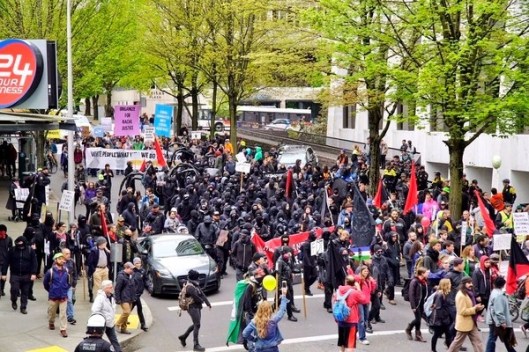
So part of the history of Oregon I uphold is that history of rebellion, reflected in another nickname for Portland, Oregon, ‘Little Beirut’.

Therefore I also stand with, and raise a toast to, the Portland, Oregon that is ‘Little Beirut’. If you don’t know what that nickname means, read this.

“Big Trouble In Little Beirut”, by John Locanthi, Willamette Week, May 4, 2016.

https://www.wweek.com/culture/2016/05/04/big-trouble-in-little-beirut/

And this from The Oregonian http://www.oregonlive.com/living/index.ssf/2016/04/little_beirut_legacy_20_of_the.html

It sucks to cite two print papers that got so much wrong back then, before and after the murder of Mulugeta, and I’m sure get so much wrong now. But I don’t have an alternative at hand. Both articles will give you a flavor of the protests and acts of militant anti-racism and resistance that preceded and followed the murder of Mulugeta Seraw.

I want that history–a history of militant resistance and rebellion–to be remembered and continued. Many of you on this thread (see Scot Nakagawa’s Facebook page) will remember because, like me, you were there.

And while it may be presumptuous of me to point this out a few days after the anniversary, I also believe that a dash of rebellion with our resistance is also a fitting tribute. Here’s to making the Mississippi of the West (if you must) Little Beirut (again).

END

Share this:

  • Click to email a link to a friend (Opens in new window) Email
  • Click to share on X (Opens in new window) X
  • More
  • Click to share on Facebook (Opens in new window) Facebook
Like Loading...

Democratic Socialists of America and Black Liberation

14 Wednesday Nov 2018

Posted by Jonathan Mozzochi in Essay

≈ 4 Comments

“The Lesser Evil? The Left And The Democratic Party” New Left Review No. 155 January-February 1986.

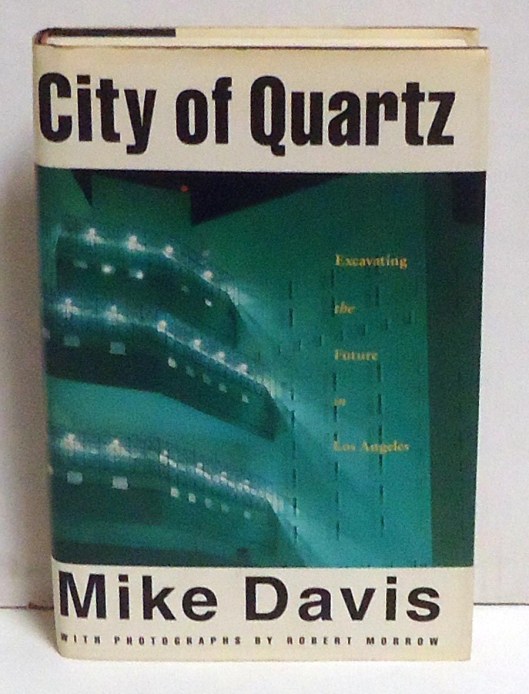
I first read Mike Davis’ City Of Quartz: Excavating The Future In Los Angeles in 1990 when it was first published. While I was born in Los Angeles, I have never called it home. All the same, whenever I feel adrift politically, I can always regain my moorings through Mike Davis. Perhaps someone in Democratic Socialists of America, around the time Bernie Sanders was sandbagged on stage in Seattle by Black Lives Matter activists, could have benefitted from a close reading of the above. Perhaps someone still could.

“Although its significance was only vaguely grasped at the time, this increasing polarization between workerism and electoralism coincided with, and was immediately conditioned by, the decline of the Black liberation movement that had been the chief social motor of post-war radicalism. A dismaying, inverse law seemed to prevail between the collapse of grassroots mobilization in the ghettoes and the rise of the first wave of Black political patronage in the inner cities. While Black revolutionaries and nationalists were being decimated by J. Edgar Hoover’s cointelpro  programme of preemptive repression and infiltration, Black community organization was being reshaped into a passive clientelism manipulated by the human-services bureaucracy and the Democratic Party. Although the civil rights movement remained an unfinished revolution with an urgent agenda of economic and political demands, its centrality to the project of a popular American left was tragically, and irresponsibly, obscured in the late 1970s. The ranks of the white, ex-student left, preoccupied with academic outposts and intellectual celebrities, showed a profound inability to understand the strategic implications of the halting of the civil rights movement. For all the theoretical white smoke of the 1970s, including the endless debates on crisis theory and the nature of the state, the decisive problem of the fate of the Second Reconstruction was displaced beyond the field of vision. With minimal challenge or debate, leading journals like Socialist Review and Dissent tacitly demoted Black liberation—the critical democratic issue in American history—to the status of another progressive ‘interest’, coeval with sexual freedom or ecology.”

And,

“But it is unlikely that the transition towards the orbit of the Democratic Party could have occurred so rapidly without the intervention and coordination undertaken by the Harrington–Howe group, now reorganized as the Democratic Socialist Organizing Committee (dsoc). The charter concept of dsoc, according to a Harrington editorial written in the wake of the McGovern defeat, was the belief that ‘the left wing of realism is found today in the Democratic Party. It is there that the mass forces for social change are assembled; it is there that the possibility exists for creating a new first party in America.”

I think that’s what Bernie Sanders has been saying for almost fifty years. As the tide that carried the ‘blue ripple’ this past November 6, 2018 recedes, a critical challenge revolutionaries face is whether that project of a ‘party within a party’ is viable and can accomplish anything of lasting value. Certainly a failure to address the unfinished Second Reconstruction will guarantee its defeat.

END

Share this:

  • Click to email a link to a friend (Opens in new window) Email
  • Click to share on X (Opens in new window) X
  • More
  • Click to share on Facebook (Opens in new window) Facebook
Like Loading...

Behind Every Great Fortune Lies A Crime Of Equal Proportion

05 Monday Nov 2018

Posted by Jonathan Mozzochi in Essay

≈ Leave a comment

They are murdering the future.

Share this:

  • Click to email a link to a friend (Opens in new window) Email
  • Click to share on X (Opens in new window) X
  • More
  • Click to share on Facebook (Opens in new window) Facebook
Like Loading...

GOT Und Uber Part One

04 Sunday Nov 2018

Posted by Jonathan Mozzochi in Essay

≈ Leave a comment

Audio Essay

got und uber 2018 part 1

The title highlights two developments with origins in the wreckage of the Great Recession. Game of Thrones and Uber prefigured the rise of Donald Trump. The touchstone cultural phenomenon of Game of Thrones explores new ways to express old ideas about blood and soil, power and authority, within a terrifying world that appears on the brink of collapse. GOT affirms the central role of nationalism in containing the threat of a world outside of capitalist market relations. Remember, it’s only the zombies who exist outside the ‘throne system’. And we are those zombies.

Uber, the corporate economic juggernaut is the tip of the spear of the Gig economy, always and everywhere a dissolving of the bonds of solidarity between workers and a rejection of whatever remains of a social contract represented by the so-called welfare state. Uber is making America move again, if only on a digital treadmill.

GOT

In approaching Game of Thrones it is useful to start at the beginning. Lest we forget, the opening scene is set at the base of the giant wall that is meant to keep out all those who refuse to accept the authority of the Throne System–most pointedly wildlings and the white walkers with their army of the dead. So there is, from the opening seconds, the wall and a zombie attack on the defenders of the wall. Together with the Throne System, this is all you need to understand in order to get caught up with the past seven years of the series. Nothing else matters.

The MacGuffin in GOT is not the throne, nor the ceaseless struggle between houses and realms for control of the throne, nor the ‘Revolution’ initiated by Denerys Stormborn and her dragons, nor the secret primeval magic hidden in the forest, nor the assassination fetishists in the money temple, nor the inter-generational conflict within houses. What moves the plot forward is the threat the dead pose to the power of the Throne System by breach of the wall. What I will argue is that we are the army of the dead; they are the overlords who rule principally because they have always ruled, by right of ancestry, family, blood, and thereby ‘race’. Don’t bother pointing out that GOT takes place in a fictional world of feudal relations–what’s important is that it recycles the ‘ancient prejudices’ of that era for modern tastes and serves as an allegory for the imperative of crushing everything outside of our modern throne system.

But what is the throne, other than the power to rule? It is control of the magic associated with blood, and bloodlines; it is the pseudoscience of ‘race’ projected forward in faux medieval terms in the only dramatic sense that has any power left: the zombie sub genre of horror.

This is why GOT should properly be classified as a blood and soil zombie soap opera that utilizes medieval fantasy conventions.

The creators of GOT know what the MacGuffin of their creation is: its resolution will come about through its diametric opposite: the super hero or the only collective action allowed by this structure, a fascist mobilization of humunculi.

GOT is a zombie series that utilizes medieval fantasy conventions. The immense popularity of the zombie horror genre is a reflection of fears about the people rebelling–when there was little chance of this, the fetid imagination of ‘a man and his castle’ could turn elsewhere–aliens, environmental apocalypse, plagues… But in a sense the fears of the ruling class always settle on zombies, because this fear represents the only real, and entirely possible, end of their world–the end of capitalism and capitalists that can only come about through a social revolution led by and composed of zombies. The only apocalypse that threatens elite rule is us; we are their end. “Everything I want is in the end of you”.

The explosion of super heroes throughout popular culture is the perfect analog to zombie fears: you know that the possibility of a mass uprising is increasing not least because the political hegemony that has been the basis for their rule is strained to the breaking point, and there is as yet no alternative in sight. But each and every infantile expression of this conundrum issued forth from the DC or Marvel ‘universe’ is a signal of weakness and anxiety, rather than a celebration of strength and assurance. It is also an expression of fears on the part of elites of an excess of democracy, of any form of collective action.

The film World War Z is the most complete and sophisticated contemporary expression of this current to date.

No surprise that the next project of the GOT creators is a fantasy where the Confederacy won the civil war, a riff on Birth Of A Nation. Fucking repugnant. More drenching in blood and race, war and nationalism. Look at the nexus of race and blood in GOT–an unleashing of reactionary themes in a war of all against all until the specter of the army of the dead appears. A thousand years in this soft porn of fascism is clearly the analog of thirty years to an amnesiac and presentist culture.

9:00

George Romero’s Night of the Living Dead.

Central take away is a racism so pathological it would rather be consumed by cannibals than saved by black people. Effective use of irony. Assault on the bourgeois family.

11:25

The zombies are us.

Allegory or parable of the Cold War. Threat of the masses.

World War Z

Shambling and running zombies.

Neo-liberalism. Liberal super hero in Brad Pitt.

The Wall. Zombies as the masses.

15:40

Twin totalitarian threats.

Camouflage is social democracy, liberalism. Genocide is the final solution.

20:00

Man In the High Castle–unwatchable train wreck on the question of what is fascism.

23:00

Drenched in blood; and there is no substance known to human beings that denotes ‘race’ quite like ‘blood’.

Blood and family 
Bloodlines
Blood for Blood
By right of birth and blood
Low born, high born

Rightful King by blood
Traitor‘s blood
Wildling blood in my veins
Lord of Light magic requires a King’s blood
There is power in a king’s blood
To defend my blood

Blood right to the throne
Blood ties

In season five, the opening scene has a witch taste a young Cersei’s blood to tell her future. 

Season 4, episode 6 “the laws of god and men.” A representative from the Iron Bank says, “across the narrow sea your books are filled with words like ‘usurper’ and ‘madman’ and ‘blood right’. Here our books are filled with numbers. We prefer the stories they tell.” 

This book, that book, they all work together. 

25:25

Soap operas are structured as a form of voyeurism wherein we watch the naval gazing of the ruling class and derive a guilty pleasure when they act badly. What’s important is that they act, we passively watch.

END

Share this:

  • Click to email a link to a friend (Opens in new window) Email
  • Click to share on X (Opens in new window) X
  • More
  • Click to share on Facebook (Opens in new window) Facebook
Like Loading...

‘Open’ vs ‘Closed’ Borders: A False Binary

03 Saturday Nov 2018

Posted by Jonathan Mozzochi in Essay

≈ Leave a comment

Tags

almost mercy, fascism, immigration, Mexico, Obama, Open source, Racism, refugees, socialism, troika, Trump

In the mutilated discourse called ‘immigration’ the false binary of the ‘open’ or ‘closed’ border is often posed absent any discussion of the colonial and imperialist wars that shape these vast movements of people. Whenever one speaks of attacking the legitimacy of fortress Europe, the United States’ militarized border with the global south or the complex of security barriers that isolate the state of Israel, one is immediately said to be in favor of ‘open borders’ and then the resultant chaos such a calamity would bring. I am opposed on principle to the way those borders structure and deform human life–creating categories such as ‘migrant’, ‘immigrant’, ‘refugee’, ‘asylum seeker’, ’emigrant’ and my favorite, with all its racist and colonial baggage, ‘expat’. But even when one takes the high road and insists on ‘asylum seeker’ rather than ‘migrant’ the trend of upholding this vast movement of people as the problem remains.

The ephemeral exigencies of American electoral politics play only a minor role in this. Obama deported–what is that number?– 2.5 million souls? We must explode this absurd binary of open and closed borders. The European Union does not represent ‘open borders’ but rather the Troika managed regulation of human labor and bio power which must meet the demands of capital–austerity and restricted movement for the many, flexible and brutally disciplined labor markets to prop up the few. When ‘borders’ are discussed as ‘facts’ that cannot be challenged, as ‘reality’ or a feature of the ‘national question’ which must be observed and accepted, lest one engage in ‘aspirational’ politics, or wishful thinking, the door to fascism gets propped ajar as it cannot be with a political program of socialist internationalism, rooted in solidarity. To effectively fight fascism we must attack the very foundations upon which borders are maintained. But not all borders, just those that are essential to neoliberalism and fascism alike. The anarchist slogan of no borders is correct, it just needs better focus.

The only way to break free from the straitjacket of ‘migration’ as an ‘issue’ and the endless racialized taxonomy that goes with it is to stand steadfast on the principle of internationalist solidarity. The perimeter and internal borders that structure our lives are essential to both neoliberal and fascist domination. Any analysis or discussion that begins by accepting as legitimate that which is illegitimate simultaneously upholds a right to regulate human labor and bio power through its endless categories of fully or lesser humans. This process turns our gaze from the juridical, material and political constructs of borders to the question of whether those intent on breaching those borders have a right to do so–whether they have a good reason to ask for asylum. But it matters not at all why people from the global South are moving north, only that that are moving north and that there are people helping them do so. At this historical juncture the most radical and far reaching act a revolutionary within the global north can take is to materially support that flow of humanity, not only because it is the right thing to do, not only because it is a good thing to do, but because it is the first necessary detonation of a 21st century socialist revolution–it is both a signal that it is underway as well as the concrete expression of the direct action needed to bring it about.

It will only be through the successive development of the Four Loci Of Attack (or something like it) and their expression as a concatenation of mutually reinforcing events that any one locus comes into being; that these agents of history become classes for themselves. Each social class cannot come into being separate from the other three.

Border attacks need manse occupations. The next complimentary phase will be housing and rent protests–mass non violent direct action aimed at palatial estates, penthouses, resorts, yacht and golf clubs. Anywhere the elite live, reproduce and recreate.

From the NYT

“But Mr. Trump’s dystopian imagery has clearly left an impression with some. Carol Shields, 75, a Republican in northern Minnesota, said she was afraid that migrant gangs could take over people’s summer lake homes in the state.

“What’s to stop them?” said Ms. Shields, a retired accountant. “We have a lot of people who live on lakes in the summer and winter someplace else. When they come back in the spring, their house would be occupied.”

Oct. 22, 2018

My response, from the film Almost Mercy:

Exactly…

One day we will look upon these fortresses as so much concrete and steel that had to yield to the far more powerful force of human freedom. Walls are never a guarantor of freedom, but a singular impediment to that freedom.

Share this:

  • Click to email a link to a friend (Opens in new window) Email
  • Click to share on X (Opens in new window) X
  • More
  • Click to share on Facebook (Opens in new window) Facebook
Like Loading...

Gutmensch

01 Thursday Nov 2018

Posted by Jonathan Mozzochi in Essay, Rant

≈ Leave a comment

Tags

1968, AFD, Die Linke, economics, gutmensch, internationalism, Left wing, open borders, sarah wagenekcht, socialist

Audio Essay

gutmensch

00:00

Gutmensch–‘good human’ in German. Not to be confused with ‘good German’, a term for those banal enablers of classical Nazism who would later, after the fall of Nazism, suffer from bouts of selective amnesia. Gutmensch, since 1968, at least, has been rebranded as a snarky term of disdain by right wing lexicographers for the global uprisings of that year. The point was to taint left politics as politically correct, bleeding-heart, attitudinal kitsch, supported by do-gooder, hypocrites. I bring it up to reference the Die Linke split and the turn to the so-called ‘social national’ underway everywhere.

‘Open’ vs ‘closed’ borders is a false binary.

Gutmensch as a straw man argument.

6:20

Left and Right.

AFD and the ‘moralizing left’.

Split from Die Linke.

Sarah Wagenecht

Wolfgang Streeck

“The materialist left, not the moralist left.”

8:40

Fortress Europe is being defended by lapsed leftists who use the charge of ‘Gutmensch’ as a cudgel to beat the bourgeoisified left and revolutionary socialists alike.

9:30

Rich people are more likely to act generously toward the poor.?!?

10:20

‘Fairland’ just means lebensraum or heimat.

MARS Motor is engaged.

13:50

Aufstehen–‘Get Up’.

The Red-Brown Alliance from Hell.

15:46

Melanchon On “stealing the bread from French workers” and “no freedom of arrival”.

16:52

A Corrective

Socialist Internationalism and Solidarity.

Our political philosophy is grounded in something quite different from such ideas. Socialist internationalism and the principle of solidarity that informs it is not a bleeding heart moralistic melodrama, it is a pillar of our ethics and a central strategic doctrine, a principle necessary for the success of our struggle that is also first in order of battle.

Socialist internationalism is the inviolable, essential principle that workers within states have more in common with workers in other states than with any national interest. They are linked together in a common struggle that overrides any national interest, especially as articulated by their national elites. This principle is most important in the core of capitalism, where fascism lives. We call it solidarity. It is inseparable from our larger identity, its importance so sacred that its violation is universally recognized as the most important failure of the left that led to World War I, its further debasement a central factor in the beginning of World War II, its importance today a bulwark against the spread of fascism.

This principle of solidarity is inviolable–never to be broken, infringed upon or dishonored.

If socialist internationalism was a religion, we could say to break this would be a heresy; its abridgment that which makes possible our evil doppelgänger in ‘national socialism’, which is where violating that principle leads. In the core countries within which fascism organizes, the abandonment of this principle can only result in the still-birth of the revolutionary movement and the opening of the door to fascism.

Solidarity is non negotiable–it shall not be bought, sold, exchanged or transferred.

Solidarity is fundamental to our revolutionary strategy.

It is a central doctrine.

When even ravers battle fascists on the streets, Michael Hardt is organizing a ship to rescue refugees in the Mediterranean, Portland, Oregon antifascists blockade ICE facilities, another caravan has departed from harsh environs to breach the northern wall and Philadelphia activists have established ‘resistance zones’; while all this is underway, the lapsed leftists of Aufagwegnacht want to debate the ‘social national’ by outflanking the AFD on pensions for workers who have lived in country for 35 years. That’s not a ‘class based proposal’ nor a turn to the ‘social’, that’s a national socialist proposal. To engage with it is to accept it as an argument, rather than an assault.

The principle of solidarity is not only essential, but first.

The Four Loci of Attack upend Marxist categories, but uphold them as well. The workers struggle is essential, but not the only struggle and rather than first, it is third in the order of battle. The other loci must shape the workers struggle, and channel it towards liberation.

This turn to the ‘social national’ is not only a failure of solidarity, but a strategic failure, too. In other words, it is a ‘moral’ failure, but worse, it concedes to neoliberals and fascists alike terrain that if given up fatally compromises the socialist revolution. That’s a strategic failure, not only a moral one, not only a violation of principle, but a departure from good politics. When you violate this principle, you abandon the revolution.

The turn to the social national is a violation of principle and therefore our ethics, our creed and above all strategy. This failure to theorize a way out of this false binary too often results in a conception of ‘the national’ not so much as a terrain of conflict that we contest but as the only terrain to contest anything. From this position comes the obliteration of the first necessary spark of a 21st century international revolution: The borders of the capitalist core.

To argue otherwise is to begin a discourse with fascism within a deranged framework of ‘immigration realism’ which is really nothing other than ‘race realism’ practiced by lapsed leftists. This is the sickening nonsense of the so-called moderate center of American politics that animates practically all discussion of borders: that this or that border is necessary and how to regulate the flow the only ‘issue’. Within this framework anti immigrant activism is ‘xenophobia’, an irrational fear of an other, rather than first and foremost institutional racism; Islamophobia is ‘religious bigotry’ rather than first and foremost an expression of racism leavened with Christian triumphalism imbedded within the very concept of the American nation.

Socialist solidarity is a principle held in perpetuity. What’s that mean? Forever.

END

Share this:

  • Click to email a link to a friend (Opens in new window) Email
  • Click to share on X (Opens in new window) X
  • More
  • Click to share on Facebook (Opens in new window) Facebook
Like Loading...

My Favorite Desert Island Movie

24 Wednesday Oct 2018

Posted by Jonathan Mozzochi in Essay

≈ Leave a comment

Audio Essay

desert island movie

00:00

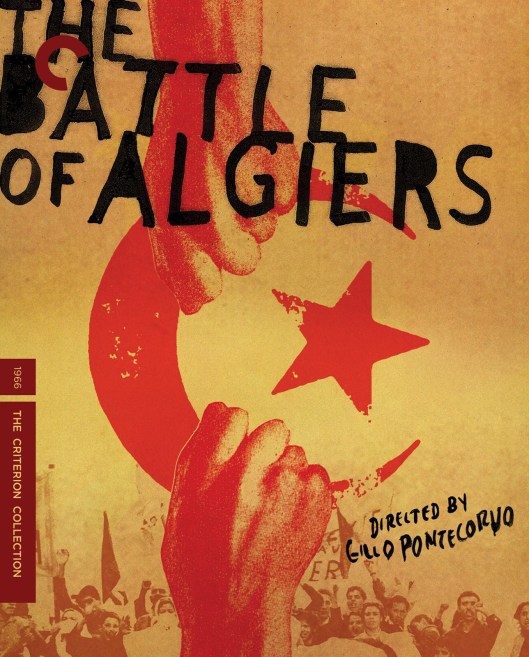
The Battle of Algiers

It’s a punk rock kinda question.

1:45

The Battle of Algiers: Bombs and Boomerangs

By Peter Mathews

(Jonathan Reading)

19:00

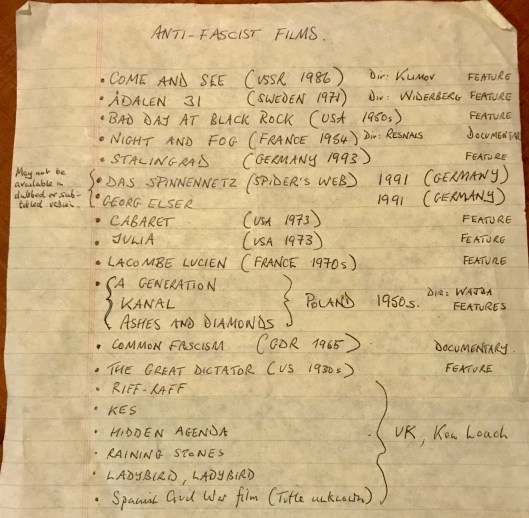
My first exposure to The Battle of Algiers was courtesy of a comrade who took me to the Multnomah County Library in Portland, Oregon to check it out (circa 1995).

The movie was part of a longer list of essential anti-fascist films that included Land and Freedom (Ken Loach) and Come and See (Elem Klimov).

I had never seen anything like it then and have never seen anything like it since.

21.30

The film has a narrow geographic scope (the Casbah or Arab Quarters in the city of Algiers) and focuses on the years 1954-1957 during which the national liberation struggle took the primary form of urban guerrilla warfare.

But, oddly enough, The Battle Of Algiers opens with the failure of the armed struggle and ends with the successful popular uprising that culminated in the ousting of the French colonialists. What does it say about armed struggle? It is deliciously nuanced about this and many other questions.

I read it as arguing this: the failure of the armed struggle was, while a failure, still a prerequisite for the success of the popular uprising.

25:15

The purity crusade references the particular cultural context of the Algerian national liberation struggle but also the lumpen proletariat and its role in revolution. Mathews understates the sequences where the lumpen tough enters a brothel and puts a pimp on notice; he later kills the pimp. The lumpen is also recruited in prison, where he is a criminal. But within an apartheid system a larger section of the oppressed population are not part of the formal economy.

30:00

Documentary feel. Non professional actors. Extending socialist realism.

The Battle of Algiers is counter cinema that implicitly undermines celebrity worship and through the crowd as protagonist and indigenous non-professionals as actors, even subverts it.

Actors are cattle.

32:30

Ennio Morricone’s score and the entire soundscape of the film are also extraordinary.

END

Share this:

  • Click to email a link to a friend (Opens in new window) Email
  • Click to share on X (Opens in new window) X
  • More
  • Click to share on Facebook (Opens in new window) Facebook
Like Loading...

The Bit Revolution

11 Thursday Oct 2018

Posted by Jonathan Mozzochi in Essay

≈ Leave a comment

    • If, following the concept of the Bit Revolution, it is now possible to track, measure and control in real time all important aspects of the processes by which things are transformed into the means of human survival, is it not possible that the ambiguous operation of converting all labor and capital into commodities through financial exchange value and the trust upon which it depends, and the arbitrary, injurious and invidious nature of this operation, has finally become, on the whole, a hinderance to human liberation rather than a step towards that liberation? Rather than a necessary step in development, say from feudalism to capitalism, it amounts to a stop on human freedom. Saying as much in 1918 would probably have amounted to so much infantile leftism; saying as much in 2018 amounts to survival.
    • The central contradiction of contemporary capitalist rule is contained within the statement made by the science fiction author William Gibson, which I take the liberty to rework: the future is here; it awaits redistribution. Behind all the shock and awe of every new disruption and innovation lies the creeping suspicion, becoming more evident every day, confirmed by every new app, every new genetic breakthrough, every new medical procedure, that ready solutions to deprivation are being systematically withheld, diverted and accumulated such that our lives are getting manifestly worse. But, what is new about this contradiction is that a solution no longer requires a period of ‘catching up’ (the Bolshevik’s NEP) or a long transition from one ‘stage’ to the next, usually characterized by an intensification of regimes of work so as to stave off a return to ‘year zero’ and the deferment, in perpetuity, of that next stage. The dynamism and disruption of 21st century capitalism need not be counterposed by a state socialist model–this binary is (potentially) entirely superseded by the networking and computing power of the Bit Revolution. What is now possible, as in no other era of human history, is the harnessing of forces that make such a transition rapid, far reaching, deep and permanent, but on behalf of the commons, controlled by the commons. This scientific and technological power existed prior to 2010, but it had yet to reach scale. Today it has, or soon will. Harnessing the awesome powers of the Bit Revolution is essential, though not sufficient, for any revolutionary endeavor. Also as in no other time in human history is the possibility of the end of organized human life that this power, if left in the hands of corporations and the state, will almost certainly bring about. You don’t think so? Who could have imagined the sheer audacity of hubris exhibited by our masters of the universe in that epic shitting of the bed that was the electoral victory of Donald Trump? Who could have imagined that from a pant suit would emerge a giant penis upon which neoliberalism would trip? Truly anything is possible. Which means our revolution is possible, too.
    • If the above argument is true, it would be possible using the power of the Bit Revolution as applied to economics to imagine, to theorize, and therefore plan, a thorough going reorganization of the means of production and reproduction beginning with the elimination of that which is harmful and useless as the basis for the expansion of that which is healthy and useful. I know, who is to say what is healthy and useful? Well, we are. Just set money and markets aside, for the sake of argument. One could, and should, map what that economy would look like, in all its particulars, over time and across space, so as to bring it about. A central conceit of capitalism is that it must grow, and that growth is inextricably linked to progress; nothing could be further from the truth. It just needs to be reorganized and redistributed, again and again. Eternal growth and a general speeding up just as easily intensify inequality, even as they raise all boats. And if my boat is a dingy, yours a yacht, however much the sea level rises will never change that fact.
    • I am fond of arguing that any fundamental move towards freedom and equality will involve the forced expropriation of private property and its redeployment in the commons. This will never come about through legislation or elections alone. An all-too common response is “but where would you stop?” Bhaskar Sunkara addressed this issue through an essay that distinguishes personal from private property, i.e. your Kenny Loggins records from factories. My response is twofold: let’s start at the top and work our way down. Besides, what a delightful problem to have–not if we should expropriate wealth, but how far down the pyramid we should go in expropriating that wealth? Oh, and if by Kenny Loggins records you really mean a yacht for which that awful music was made (yacht rock), we will take that, too.

    Share this:

    • Click to email a link to a friend (Opens in new window) Email
    • Click to share on X (Opens in new window) X
    • More
    • Click to share on Facebook (Opens in new window) Facebook
    Like Loading...

    Periodizing As A Feature of Fascism Redefined

    Featured

    Posted by Jonathan Mozzochi in Essay

    ≈ Leave a comment

    Political Geography

    Social base

    Ideology

    Motor

    Periodization

    ….

    How the first four elements interact over time is my fifth element–periodization. To visualize this we can use a picture frame to view our subject matter; the mortise and tenon joint is comprised of the first four elements, the whole frame is the era.

    These eras are:

    Classical Fascism 1921-1945

    Cold War Fascism 1945-1990

    21st Century Fascism 2010–

    In another sense I am just focusing attention on what was happening within and to fascism during this long span of history. Elsewhere I will situate that effort within Régis Debray’s broader medialogical history of ideas (a frame around a frame, if you will) although with a caveat–that the current era we are in is not the videosphere, but the Bitosphere, a part of the Bit Revolution.

    We can see why such a periodization is important in understanding the threat of fascism today by noting what can happen when some other frame, often unacknowledged, is used.

    Christopher R. Browning’s “The Suffocation of Democracy” in the New York Review of Books (October 25, 2018) is exhibit one. To be fair, Browning is an historian of classical fascism, in particular the holocaust, who wrote the article cited above at the prompting of friends and colleagues who wanted, as we all do, satisfactory answers to two questions: What are the parallels between fascism then and now? What are the differences? Not unreasonable questions. But the very framing of the questions conditions the answers.

    Browning extrapolates from a definition of fascism rooted in the classical period forward to the present. In doing so he does what virtually everyone else does, he skips what happened in between. He reasons from a definition of fascism 70-100 years ago to the present, with a frame of liberal democracy vs the twin totalitarian threats. In this he mischaracterizes the nature of fascism, perhaps not so badly in its classical phase, but wildly so today.

    Projected out across a sea of time and space this approach to the problem of fascism is ahistorical. In this his broad sweep of history doesn’t hold up.

    But he is not alone. It is a rarity for anyone to discuss fascism during the Cold War era because the common wisdom has it that fascism died with Hitler in the bunker, leaving the ‘free world’ to fight communism. Fascism didn’t do anything over that time period because it was dead. Its reemergence in the 21st Century, if one even concedes that it has re-emerged at all, is ex-nihilo. And herein lies the problem: this operation, repeated add nauseam throughout the liberal and socialist press serves narrow political goals (fighting republicans, supporting a narrow anti-capitalism, encouraging a split from Die Linke over ‘open borders’, etc.,) but at the expense of history and thereby a viable revolutionary socialist project.

    From a reasonable question (fascism then vs now) comes an analytical movement of staggering stupidity and often breathtaking dishonesty. But, as I noted above, this is not confined to liberals.

    Exhibit two. Here’s the same nonsense from Bhaskar Sunkara’s “A Thousand Platitudes: Liberal Hysteria And The Tea Party” (New Politics, June 2, 2011).

    “Though many of its shock-troops have come from lumpenproletarian elements, fascism has historically been a petit-bourgeois movement that can only be understood within the context of a militant left. German and Italian fascists disrupted strikes and physically attacked left-wing meetings. This historically specific brand of reaction implies that there was a vibrant workers’ movement challenging capitalist class rule, forcing elements of those on top to attempt to gamble on empowering the fascists in order to ultimately preserve the existing class structure. The American left is a marginalized and besieged political force, not exactly ready to storm the barricades.”

    “Historically”, “within a context”, “historically specific brand.” As in waaay back when, not now.

    Restated, Sunkara argues: Fascism can only exist if workers pose a credible threat to capitalist rule. Workers pose no threat to capitalist rule. Therefore fascism cannot exist.

    If Sunkara insists that the far right represents an episodic readjustment of capitalist command and control, Browning relies on a fairy tale of the post war era so as to isolate the phenomenon of 21st century fascism from it.

    “Today, President Trump seems intent on withdrawing the US from the entire post–World War II structure of interlocking diplomatic, military, and economic agreements and organizations that have preserved peace, stability, and prosperity since 1945. His preference for bilateral relations, conceived as zero-sum rivalries in which he is the dominant player and “wins,” overlaps with the ideological preference of Steve Bannon and the so-called alt-right for the unfettered self-assertion of autonomous, xenophobic nation-states—in short, the pre-1914 international system. That “international anarchy” produced World War I, the Bolshevik Revolution, the Great Depression, the fascist dictatorships, World War II, and the Holocaust, precisely the sort of disasters that the post–World War II international system has for seven decades remarkably avoided.”

    Setting aside his characterization of the Bolshevik Revolution as a disaster, note that other disasters of this splendid post war era –Hiroshima, Nagasaki (with which it was inaugurated) the obliteration of North Korea, the Vietnam Invasion, Apartheid, and Jim Crow, Rwanda, etc., are apparently separate from the peace and prosperity he cherishes.

    So the liberal in part protects what is by defining fascism as entirely separate from it; the patrician socialist attacks what is but cannot make the leap to something else because of blindness to what also, through different means, blocks its path.

    The question restated: what the fuck was fascism doing from 1945 until 1990? What has happened within fascism from 1990 to the present?

    That obliteration of an important slice of history serves a purpose: to obscure the true nature of fascism as a desperate exit strategy from the contradictions of capitalism in favor of a future oriented nostalgia that reinforces the worst aspects of that system.

    Let’s cue Chomsky–not on fascism, which I think he misunderstands also, but on this notion of framing. Every time someone does this on the subject of fascism–extrapolates across 70 years–they perform an analytical operation similar to that of characterizing the slaughter that was carried out from 1961–1975, on the part of the United States, in Indochina as ‘the Vietnam War’ the ‘Vietnam Syndrome’ or ‘Vietnam Quagmire’ but never, ever, ‘The Invasion of Vietnam’. A mistake. A missed opportunity. A failure. Never the predictable results of deliberate policies carried out with bipartisan consensus.

    Conservatives draw a somewhat different lesson. My favorite runs like this: fascism was incubated within relatively liberal and democratic polities, (Italy, Germany) yet fascism itself was illiberal (anti democratic) and took aim at that same civic society. Those civic institutions responded in the only way they could–by strengthening those selfsame institutions. This, paradoxically, fertilized the soil for fascism to grow. Ugh. Vicious circle, right? Wrong. Why?

    From here it is but a short hop to this conclusion: fascism is a creature of the mob, of the dangerous classes, of the hoi polloi, of an excess of democracy. Fascism comes about through polarization and the collapse of a moderate center, rather than racism, nationalism and war. The stifling of civic society and the intensification of inequality, become necessary evils.

    The upshot is this: We all need a little irritating authoritarianism with our morning breakfast so as to avoid the painful bowel movement of totalitarianism in the afternoon. But that’s a steady diet of nothing in the service of the status quo, not an analysis a socialist should respect, much less use.

    Browning says, however, that there is a divergence between then and now:

    “The fascist movements of that time prided themselves on being overtly antidemocratic, and those that came to power in Italy and Germany boasted that their regimes were totalitarian. The most original revelation of the current wave of authoritarians is that the construction of overtly antidemocratic dictatorships aspiring to totalitarianism is unnecessary for holding power. Perhaps the most apt designation of this new authoritarianism is the insidious term “illiberal democracy.” Recep Tayyip Erdoğan in Turkey, Putin in Russia, Rodrigo Duterte in the Philippines, and Viktor Orbán in Hungary have all discovered that opposition parties can be left in existence and elections can be held in order to provide a fig leaf of democratic legitimacy, while in reality elections pose scant challenge to their power. Truly dangerous opposition leaders are neutralized or eliminated one way or another.”

    So the threat is these ‘authoritarians’, growing everywhere who “aspire” to “totalitarianism”.

    Browning then dissolves everything into the plaintive cry of the sappy liberal:

    “The racial division, cultural conflict, and political polarization Trump has encouraged and intensified will be difficult to heal. ”

    That’s as eloquent and empty a summary of the politics of liberal bullshit as any has ever written. Note how ‘fascism’ has totally supplanted ‘populism’ in this treatment–but the use of the term as an epithet denuded of explanatory power remains.

    Browning ends with the obligatory environmental apocalypse coda, and just in case you aren’t sure if you are reading this in the NYRB, he reminds you: “No wall will be high enough to shelter the US from these events.”

    I agree–that fucking wall won’t be high enough to protect the masters from the hordes. But we won’t wait for rising sea levels to tear it down, we will do it sooner, along with all that “post war peace and prosperity” you have inflicted on us.

    END

    Share this:

    • Click to email a link to a friend (Opens in new window) Email
    • Click to share on X (Opens in new window) X
    • More
    • Click to share on Facebook (Opens in new window) Facebook
    Like Loading...

    The Dark Triad

    21 Friday Sep 2018

    Posted by Jonathan Mozzochi in Essay

    ≈ Leave a comment

  • If private property is organized along anti democratic lines, inherently dictatorial and tyrannical, marked by arbitrary and invidious distinctions, injurious to, exploitative of and oppressing the great masses subject to its rule, is it any wonder that the gold standard for the contemporary corporate executive is to be found in the psychological theory of the Dark Triad–that unique pathological combination of self absorption, absolute lack of empathy, and ruthless quest for power?
  • See Elon Musk smoke weed. See him demanding and receiving obscene tax breaks for a battery factory in Sparks, Nevada. See the economic footprint of that factory immediately spike rents and fill trailer parks to overflowing, the dazed residents dislodged from multigenerational housing to become nomadic Amazon distribution center gig workers, their homes now on four wheels. See Elon throw a tantrum and initiate a petulant plan to take his toys from the sandbox and go private. See Elon change his mind. See Elon display delusions of grandeur and describe himself, in all seriousness, as a socialist.
  • See Elon. Hear Elon. Read Elon. Watch Elon. Elon. Elon. Musk. Musk.
  • The type of democracy we have is exemplified by the kind of freak Musk is. Until very recently, the quality of news coverage he has received can only be faithfully rendered as fourth estate fellatio. A celebrity sociopath who is at the apex of a political and economic system that increasingly demands, and receives, leaders that fit the personality disorder of the Dark Triad–narcissism, sociopathy and a Machiavellian quest for power. Trump is, of course, the other exemplar.
  • Share this:

    • Click to email a link to a friend (Opens in new window) Email
    • Click to share on X (Opens in new window) X
    • More
    • Click to share on Facebook (Opens in new window) Facebook
    Like Loading...
    ← Older posts
    Newer posts →

    Subscribe

    • Entries (RSS)
    • Comments (RSS)

    Archives

    • February 2023
    • December 2021
    • August 2021
    • July 2021
    • May 2021
    • January 2021
    • November 2020
    • October 2020
    • September 2020
    • August 2020
    • July 2020
    • June 2020
    • May 2020
    • April 2020
    • November 2019
    • September 2019
    • August 2019
    • July 2019
    • June 2019
    • May 2019
    • March 2019
    • February 2019
    • January 2019
    • December 2018
    • November 2018
    • October 2018
    • September 2018
    • June 2018
    • March 2018
    • February 2018
    • January 2018
    • October 2017
    • May 2015
    • April 2015
    • November 2014
    • July 2014
    • December 2013
    • October 2013
    • August 2013
    • July 2013
    • June 2013

    Categories

    • Book Review
    • Essay
    • Fiction
    • Memoir
    • Movie Review
    • Podcast Review
    • Portland Anti-Fascist Archives Project
    • Rant
    • Snippets

    Meta

    • Create account
    • Log in

    Blogs I Follow

    • Counting Crowds
    • Rain Coast Review
    • birchsays
    • BRAINCHILD
    • In Dianes Kitchen
    • Being Zab
    • chrislondon.org
    • Wandering Ambivert
    • The Decolonial Atlas
    • Site Title
    • HARD CRACKERS
    • R.J. Slater
    • ∞
    • strangeparadisehq.wordpress.com/
    • Work With Lapo
    • rajchandran2013
    • Table 41: A Novel by Joseph Suglia
    • Mark Bray
    • Selected Squibs, Scrips, and Essays by Joseph Suglia
    • Democracy & Good Governance

    Blog at WordPress.com.

    Counting Crowds

    Blog of the Crowd Counting Consortium

    Rain Coast Review

    Thoughts on life... by Donald B. Wilson

    birchsays

    BRAINCHILD

    gehadsjourney.wordpress.com

    In Dianes Kitchen

    Recipes showing step by step directions with pictures and a printable recipe card.

    Being Zab

    The Storyteller (Qissa-Go)

    chrislondon.org

    Wandering Ambivert

    The Decolonial Atlas

    Site Title

    HARD CRACKERS

    R.J. Slater

    educator, writer, photographer

    ∞

    strangeparadisehq.wordpress.com/

    A hotchpotch of random stuff I'm working on... articles, songs, writing/YouTube projects

    Work With Lapo

    rajchandran2013

    4 out of 5 dentists recommend this WordPress.com site

    Table 41: A Novel by Joseph Suglia

    Mark Bray

    Historian. Organizer. Writer.

    Selected Squibs, Scrips, and Essays by Joseph Suglia

    The Web log of Dr. Joseph Suglia

    Democracy & Good Governance

    Building A Better World

    • Subscribe Subscribed
      • Ghosts of Anti-Fascism Past
      • Join 35 other subscribers
      • Already have a WordPress.com account? Log in now.
      • Ghosts of Anti-Fascism Past
      • Subscribe Subscribed
      • Sign up
      • Log in
      • Report this content
      • View site in Reader
      • Manage subscriptions
      • Collapse this bar
     

    Loading Comments...
     

      %d