
• Home
  • About Jonathan
  • Essay
  • Fiction
    • Rant
  • Memoir
  • A House Divided, Full of Secrets: Kid Lit., Conspiracies and the Bohemian Club

Ghosts of Anti-Fascism Past

~ Essays. Memoirs. Rants.

Ghosts of Anti-Fascism Past

Category Archives: Essay

Out of Prison, Into Debt: Bank Robbers and Bootstraps

27 Sunday Oct 2013

Posted by Jonathan Mozzochi in Essay

≈ 1 Comment

Tags

African American, American Legislative Exchange Council, Black Bart, Frank Rich, Henry Wells, peace dividend, Pursuit of Happyness, Rand Paul, San Francisco, Wall Street, Wells Fargo, Will Smith, William Fargo

A Museum to Money

A cheerful young docent began our tour of the Wells Fargo Museum in downtown San Francisco with a ‘Q&A’: How many pioneers can that stagecoach, around which we sit, hold? Ten? Fifteen? The answer ended up being a seemingly impossible number (thirty-something I recall) and our cheerful guide continued loading our fifth-graders from Marin County onto the wagon, one by one, until collectively they resembled a terrifying creature with multiple protruding heads and limbs, rolling and writhing about in search of gold and prey.

At least that’s how I imagine many Native Americans, on first encounter, must have viewed them.

The museum was everything you might expect from a tourist trap devoted to a bank: a dumbed-down chronology of technological innovation and capital accumulation scrubbed of offending data, social conflict, or critical consciousness but with nods to major historical periods (the depression) and the bank’s prescient track record (they saw it all coming and are a huge success!).

Those plucky pioneers faced tough conditions, the museum seemed to say, but with plenty of grit and innovation, a healthy protestant work ethic, an insatiable desire for riches and the welcome stability of a solid financial institution, they endured and prospered.

Meh.

I got a bit chippy with the docent when the kids were lined up for their turn to fondle gold nuggets and coins. This was structured as the high point of the tour–a creepy sensual indulgence in commodity fetishism. The kids, pupils dilated, perfectly represented the ‘idolatry of wealth’ the museum embodied. The docent gave me a bemused look when I refused to fondle her wares. But there are always cracks, however small, in any edifice built by humans; the Wells Fargo Museum being no exception.

On the museum’s second floor there was a cardboard standup replica of Black Bart, a notorious and apparently somewhat successful, stagecoach robber. He was appropriately menacing, all dressed in black and despite a nearby wall that featured “Robbers and Heroes” (a clumsy dichotomy, that one), the kids, grinning and pantomiming gun play, had their pictures taken with the Robber.

No one posed with the oversized oil portraits of William Fargo and Henry Wells that adorned the entrance to the museum.

I wonder why?

Is it because Black Bart was eventually caught and the bank now enjoys a certain satisfaction in his display, the children sharing in his capture and demise? Contemporary thieves pose no threat to our modern titans of finance, who are, after all, modern Robber-Barons. This is no doubt part of the answer, but not all of it.

I tend to look for the awkward non-sequitur in installations such as these; that little something that might reveal an unintended truth. Such a moment came as a creaky service cart, not unlike that used to haul dishes in a restaurant, was wheeled out. On the cart was propped a framed portrait of a black man, ‘William Robison, Stagecoach Driver’ together with a page-length biography of the gentleman. The display appeared as an afterthought; perhaps someone’s hasty attempt to redress a grievance.

I wonder what grievance that could have been?

The display was cringe-worthy and appalling.

Consider that for a black man in mid-19th century America to be a stage coach driver for Wells Fargo would be the career choice of someone with a death wish.  He’s the guy the robbers have to go through to get the loot, probably the most dangerous job in that entire industry, the one you are most likely to be killed performing. So the black guy, probably reeling from the suppression of the revolution that was Reconstruction following the Civil War, can go to work for white bankers. For Wells and Fargo–Bill and Hank.

Our kids enjoy posing with the (white) Robber who, in order to get his loot, must shoot the (black) stagecoach driver who works for Wells and Fargo (who, incidentally, probably wouldn’t loan a black person a dime). That sounds like an apt metaphor for our racialized political economy. People can sacrifice themselves for the good of a bank and are memorialized with a shitty little cart.

The physical placement of a picture of an African American man on a cart also suggests black people are an aside for Wells Fargo, an after-thought, to be wheeled out when needed and stored in a dark closet, when not.

There was one other awkward and offensive little cart that featured a similar framed picture of a white female Wells Fargo employee, but the display was softened by its implicit inclusion in a larger exhibit mounted on a wall featuring more contemporary, and presumably more powerful, female Wells Fargo employees.

I’d almost feel better knowing the field trip was funded by the bank, rather than public funds. Both options are repugnant.

How about a ‘Banks and People’ installation where students can learn about the social, economic and political effects of financial institutions, especially when they go awry? Was it really necessary for my child to visit this place? Is this a part of a new program, ‘No Child Left Out of Debt’?

The Pursuit of Happyness

If the Wells Fargo Museum is designed to obscure the role banks play in the reproduction of social inequality, the 2008 film The Pursuit of Happyness, starring Will Smith, reproduces a subtle and cruel irony about that inequality: the very institution that in the real world destroys men such as Will Smith’s character is the same institution that the film-makers offer for salvation.

The Pursuit of Happyness chronicles the heart-wrenching ‘true story’ of an African American man and his young son struggling to survive in 1980s San Francisco. While watching The Pursuit of Happyness I wept as the protagonist and his young son are slowly reduced to indebtedness, abject poverty, and homelessness. Although the film is well acted and watchable, the narrative lessons implicit in its story make it loathsome–as mendacious and despicable a cinematic rendering of the African American experience I can recall, all the more so because it is really, really, painful to watch.

Our hero’s salvation comes at a price, namely his community. Note that the money Will Smith’s character loans an investment banker (to Smith a truly precious $5.00, but nothing to the banker) is magnanimously and ceremoniously paid back at the end of the film; but the money Smith loans an African-American ‘friend’ is not. Note how the illusion of a meritocracy is upheld in this film; how the bureaucratic reality of high finance is softened with a nod to affirmative action, as when Will Smith’s boss says that ‘usually’ the highest score on a test wins the job, but not always. We don’t actually know what Will Smith’s test score ends up being, but we can entertain a warm and fuzzy feeling imagining Wall Street as flexible and dynamic enough to reward such heroic effort as a way to humanize their warped meritocracy.

Smith’s wife leaves both he and his child; a reversal of the oft cited absence of African-American males in the lives of their offspring. The domestic implosion that follows soon after is brutally and effectively portrayed.

While the film’s setting is 1980s urban San Francisco and we get the obligatory portrait of Ronald Reagan, drugs are strangely absent, as is the AIDS crisis.

The precipitating event that launches our character’s descent into hell is an IRS seizure of his last few dollars. This is a nod to the libertarian populism at the center of the film’s message: those plucky ‘up by your bootstraps’ exhortations so essential to Rand Paul’s right wing torch and pitchfork appeal. Paul’s attacks on Wall Street are geared towards ‘liberating’ financial services so they can feed unhindered, not restrain their rapaciousness or much less ameliorate their harsh social effects.

The film unconsciously displays the social Darwinism that underpins the competition Smith has sacrificed everything to win, without following up to show what it has wrought: the dozens of ‘losers’ who have for months given free labor to the company, only to be left with nothing.

Only one survives–and thrives. Plucky pioneers, plucky black guys.

I was recently with my 10-year-old in the the Richmond District of San Francisco, near Ocean Beach, where the Golden Gate Park meets the Pacific Ocean. I pointed out that San Francisco’s public bus benches are exquisitely constructed so as to make sleeping on them impossible, whereas in the film father and son often found welcome, if temporary, refuge on benches that at the time would accommodate them.

Kinder and gentler.

That is the most disturbing aspect of the film; how our society treats children. Banks, as top-notch predators within our winner-take-all economic system, help tear asunder our modern families, making them disposable: easy to assemble and just as easy to disassemble. Financial institutions and other corporations, having created the conditions which hurl children to the mercy of the streets, are only too happy to perform the largely empty task of charity and take over the role of government in providing for the social good.

Except they don’t.

The proximate causes of this catastrophe are those grand bi-partisan experiments with ‘welfare reform’ and ‘workfare’ undertaken in the 1990s together with numerous illegal and unjust wars and a frenzied scrapping of that post cold war ‘peace dividend’. After having eviscerated our ability to care for the young and old, infirm and differently abled, war veterans and everyone else, we have shunted this responsibility to the very institutions that caused it in the first place.

I’ll tell you how that happens: it happens when we allow depraved charlatans such as Rand Paul to pose as populist reformers, or radicals, when in fact they are blood sucking freaks. Even the normally reliable Frank Rich with the New York Times Magazine, (“It’s Hard to Hate Rand Paul”, September 22, 2013) gives this American neo-fascist a pass because he now supports overturning mandatory minimum sentencing. You remember this almost three decade-long experiment in mass incarceration that doubled the number of imprisoned Americans from about 1 million to 2 million through racist policing, ‘three strikes’ legislation, draconian drug sentencing guidelines and a frightening increase in the privatizing of prison services?

Why would Rand Paul be opposed to that, you ask?

Because the American Legislative Exchange Council (ALEC), a sort of right wing sewer where libertarian lobbyists and ‘free market’ policy experts coagulate, have figured out a way to make more money releasing prisoners than they can make putting more in.  In her article “US criminal justice system: Turning a profit on prison reform?” Charlotte Silver argues that some corporations are hoping to changes sentencing laws so as to make money off newly released prisoners:

“In competition with private prisons are other industries which are coming up with solutions to reduce incarceration costs that will benefit them. For instance, a 2007 brief by ALEC recommended releasing people early from prison with conditional release bonds, similar to bail bonds, effectively setting up bonding companies as private parole agencies.”

The report suggests, in other words, that there are plenty of other people happy to step in and make money off of an inevitable “reform”.

Newly released parents can come out of prison in debt, perhaps to the same company they will then have to work for.

End.
Share this:

  • Click to email a link to a friend (Opens in new window) Email
  • Click to share on X (Opens in new window) X
  • More
  • Click to share on Facebook (Opens in new window) Facebook
Like Loading...

All Atwitter Over The ‘Barefoot Pope’

29 Thursday Aug 2013

Posted by Jonathan Mozzochi in Essay

≈ 2 Comments

Tags

adolfo perez esquivel, archbishop desmond tutu, bishop desmond tutu, christian leadership conference, latin american liberation theology, representative john lewis

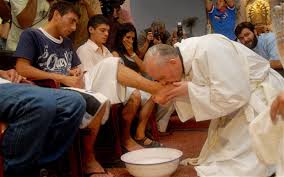
Pope Francis

Pope Francis

Introduction

I am not a believer in Catholicism; I’m not even Christian. Nor am I in any sense religious. But I have always been interested in, and strive to be open to, those who are. In my youthful days as a rabble-rouser I learned to hold in high regard the great currents of social change rooted in religious traditions–Latin American liberation theology such as that practiced by Paulo Freire, Adolfo Perez Esquivel and Leonardo Boff; Christian anti-Apartheid activism in South Africa, in particular that practiced by Archbishop Desmond Tutu, Rev. Allan Boesak and Rev. Dr. Colin Jones; the social gospel and civil disobedience of the American civil rights movement; Buddhist and Islamic anti-colonialism, the Jewish anti-fascist tradition, and so on.

I still do.

In the 1980s I was fortunate to have first-hand experiences with Christian ‘base-communities’ in Nicaragua, El Salvador, Guatemala and Mexico. I joined a United States Delegation to Central America sponsored by Witness For Peace in 1985 (I was 19 years old then) and later volunteered with Peace Brigades International in Guatemala. Both of these programs were (are) rooted in the social justice traditions of Christianity represented by the interdenominational journal Sojourners and the dissident National Catholic Reporter.

As a student radical during the 1980s I helped raise money and awareness to sponsor the Reverend Dr. Colin Jones, then an assistant to Bishop Desmond Tutu of South Africa and the Anglican church, for a post in Portland, Oregon. In this endeavor I was influenced by a New Zealand Church of Christ pastor, Jim Stuart, who helped guide my understanding of faith and social justice.

In the 1990s I would have the opportunity to meet with such American civil rights champions as Rev. Joseph Lowery of the Southern Christian Leadership Conference, Presidential Medal of Freedom honoree Rev. C.T. Vivian, and the legendary Georgia Representative John Lewis.

I evaluate any religious tradition by its dogma (what it asserts, or says) and acts (what it actually does), the two together forming what liberation theologians refer to as ‘praxis’, the ongoing reflective process of combining theory and practice. What the praxis is of a given religion in relation to social inequality–and secular ideologies should be subjected to this same rigorous treatment—-constitutes my litmus test.

To this end I offer my impressions of the unfolding Papacy of Pope Francis.

All Atwitter Over The ‘Barefoot Pope’

The earthly ascension of Jorge Mario Bergoglio, now known as Pope Francis, to lead the Catholic Church has been heralded as both ground-breaking and a significant rupture with the past. He is the first non-European pope in 1300 years, the first pope from the Americas (Argentina) and the first pope who hails from the Society of Jesus (the Jesuits). Even his chosen name, ‘Pope Francis’, in honor of Saint Francis of Assisi, the much beloved spiritual icon for the poor and dispossessed, is unorthodox.

Within days of his election, the Argentinian iconoclast initiated his first Twitter account: @Pontifex.

The very act of electing Pope Francis while the outgoing head of the church, Pope Benedict, was not yet dead, was also out of the ordinary–the office has not changed hands from one living pope to another in six hundred years. Reflecting the world’s most entrenched and enduring patriarchal institution, a sitting pope is always ‘Supreme Pontiff of the Universal Church’ for life. He never resigns, nor is ever removed, for any reason, while living. That pope Benedict resigned and has been supplanted while still in earthly form undoubtedly reflects an institution attempting to contain, and thereby ameliorate, what are several, often interlocking, scandals.

Any early assessment of Pope Francis must take into account these trends.

Schisms and Scandals

First, there are the persistent and very widespread incidents of child sexual abuse that have been alternately ignored, tolerated, occasionally encouraged and often covered up. Secrecy has been at the core of this drama and will remain at the forefront of Vatican troubles. Criminal convictions of church officials and accompanying secret settlements intended to silence victims appear to continue apace with no sign of a break with church dogma or practice in the offing. Without a change in the culture and practices of the church–in particular some rather 19th century views on gender–we are likely to see recurrences.

The so-called ‘Vatileaks scandal’ that erupted in 2012 has centered on Vatican financial and moral corruption. Then Pope Benedict’s butler compiled and later released secret accounts of a ‘gay lobby’ active within the Vatican hierarchy together with other salacious material. Some of those reputedly gay church officials were being blackmailed for financial gain; there was rampant embezzlement and corruption ‘discovered’ within the Vatican Bank as well. All this was taking place within a Vatican culture of other-wordly exceptionalism anchored within the real-world of all-too human desires and failings.

It seems disingenuous not to refer to the church’s policies of priestly celibacy and opposition to birth control and abortion in this regard; but we rarely hear these items linked in reporting or analysis.

Three longer-term trends bode ill for the Vatican.

Protestant Evangelicals–pentecostalists in particular–have been outflanking the Catholic church in Latin America for decades through an aggressive theology of ‘prosperity through piety’ (The Economist August 3, 2013) and partnerships with the region’s most repressive political movements and governments. (I will not cite The Economist for that second point; that’s my own).

Free Market Capitalism (Neo-Liberalism)–free-wheeling consumer capitalism undermines the church through its emphasis on faithless individualism and acquisitiveness. While such ideology obviously does not prohibit the coexistence of Catholicism and capitalism–they often go quite well together–they remain in competition with one another in a ruthless, winner-take-all system.

South/North. A continuing rift between the church of the South (third world) and the church of the North (first world) perhaps goes to the heart of the identity of the Catholic church. Much has been made of cultural splits, especially along gender lines, but the deeper, more significant divide is around issues of inequality.

So this pope has a great deal on his plate.

We might speak of two contradictory currents within the Catholic Church: that of the followers of St. Francis of Assisi (but not necessarily Pope Francis) and the Saint’s commitment to the poor; and, those who uphold a dictatorship of privilege, deception and inequality.

Much of the sparkle, excitement and easily digestible ‘talking points’ reflected in mainstream press coverage of Pope Francis reflect the tension between these two currents; if only unconsciously.

Pope Francis and his Social Manifesto.

On his trip to Brazil Pope Francis issued his first social manifesto, telling politicians that more was needed to be done to wipe out social inequalities and a “culture of selfishness and individualism.” (Catholic News Service, July 25, 2013). “No one can remain insensitive to the inequalities that persist in the world” he said, and “no amount of peace-building will be able to last, nor will harmony and happiness be attained in a society that ignores, pushes to the margins or excludes a part of itself.” (Vatican Radio, July 25, 2013).

During a mass in Brazil he urged Catholics to “resist the ‘ephemeral idols’ of money, power, success and pleasure.” (The Guardian, July 25, 2013). Earlier in his papacy Pope Francis used the terms “savage capitalism” and the “dictatorship of the economy.” (Reuters, May 21, 2013). His visit to Brazil came on the heels of massive, populist protests throughout the country, many centered in Brazils ‘favelas’, or slums, and aimed at opposing lavish funding for the upcoming Olympics and Soccer World Cup, as well as pricing for public transportation, among other pocket-book issues. Pope Francis’ tour also included a stop in a ‘pacified’ favela.

In Italy the new pope highlighted the plight of refugees who died fleeing poverty.

An Al Jazeera column described him as a “humble son of a railwayman.” His populist bonafides are reinforced when we consider that he was not on anyone’s short list to be elected pope prior to the cardinal conclave this past March.

We continue to be transfixed by media reports of Pope Francis washing the feet of the downtrodden all the while scolding political and economic elites for their callousness.

Finally, this pope has refused to be housed in that cradle of opulence known as the apostolic apartments within Vatican City and has chosen more modest accommodations nearby; he eschews the fashionista trappings of his predecessors, preferring simple robes to lavish vestments, and is an outspoken proponent of public transportation–no pope-mobile here.

The Vatican Press Corps was all atwitter as the new Pope inaugurated an open-ended, free-wheeling chat session aboard his private jet en route to the Vatican, fresh from his wildly successful World Youth Day in Brazil. Previous popes had been exclusive and restrained with the press, hastily announcing press conferences that were scripted with pre-planned questions and short, controlled exchanges. This Pope fielded twenty-one questions over a period of more than one hour and addressed, at least in part, and in some respects ‘off the cuff’, the most serious issues facing the church.

The most covered segment of his chat concerned his response to a question about the ‘gay lobby’ within the Vatican and the church’s policy on homosexuality. His response is deliciously clever, and worth quoting in full, so I’m going to reprint conservative New York Times columnist Ross Douthat’s summary of the exchange (July 30, 2013); Douthat in turn relies on a transcript from the Catholic News Service (July 29, 2013).

“… Pope Francis said it was important to ‘distinguish between a person who is gay and someone who makes a gay lobby,’ he said. ‘A gay lobby isn’t good.’

‘A gay person who is seeking God, who is of good will — well, who am I to judge him?’ the pope said. ‘The Catechism of the Catholic Church explains this very well. It says one must not marginalize these persons, they must be integrated into society. The problem isn’t this (homosexual) orientation — we must be like brothers and sisters. The problem is something else, the problem is lobbying either for this orientation or a political lobby or a Masonic lobby.’

Three items jump out here.

First, the pope’s “…who am I to judge…” response suggests an opening on the subject; but it is an opening that can be slammed shut by the simple answer “Well, you’re the Pope!” According to church dogma, in the final instance, the Pope is perhaps the only one who can judge.

So he invites an opening by saying, in effect, “gay Catholics are fine, so long as they don’t organize for their rights.” Pope Francis also suggests an acceptance of gays and lesbians seeking salvation in the Catholic church, but says nothing about gay people seeking it elsewhere, or not at all. An economical position, if there ever was one.

Second, the distinction between ‘sinful’ acts and ‘the sinner’ smacks of a familiar, and disingenuous, parsing of language meant to deflect charges of homophobia and, at a deeper level, misogyny.

Third, by closing his remarks on this subject with a reference to a ‘Masonic lobby’, Pope Francis gives an undeniable shout-out to the reactionary wing of the Catholic church, Masons being a familiar bogeyman of the Catholic right.

Is Pope Francis signaling that he is navigating a treacherous path between reform and reaction?

The Dirty War

This triangulating, or balancing act, may be the most salient character trait of this pope. His legacy could be undermined by the historical pope Francis–the actual past of the flesh and blood Jorge Mario Bergoglio–and what he did, or did not do, during a blood-stained period of his country’s history.

I don’t know if Pope Francis has something to confess regarding his time as a Catholic cleric and leader of Argentina’s Jesuits during the military dictatorship (1976-1983), but the terms ‘collude’ and ‘collaborate’ offer up a rich catalog of sins–of omission, of commission, from ignorance, in word, and in deed, such that I have to wonder: did Pope Francis do all he could to protect human life during those terrible years? Is there, or should there be, a ‘mea culpa’ forthcoming? What was it like meeting with officials of the dictatorship knowing the counterinsurgency war underway against ‘subversives’ was devolving into a murderous urban pacification program so despicable as to force us to rewrite our vocabulary of repression?

Any list of the morbid neologisms contributed to the world by the Argentinian dictatorship would include, but not be limited to, the following:

  • ‘Los Desaparecidos’ (The Disappeared)–Victims of the dictatorship made to vanish through anonymous torture and murder. The term is a nod to Hitler’s ‘Nacht und Nebel’, (‘Night and Fog’) policy of vanishing all human resistance to the Nazi regime, even down to the sites of graves of its victims.
  • ‘Operacion Condor’ (Operation Condor)–a regional strategy of repression aimed at the left, pursued by southern cone nations with help from the United States, that culminated in tens of thousands dead in half a dozen South American countries.
  • ‘La Guerra Sucia’ (The Dirty War)–self-named by the dictatorial generals who led it. A war of urban counterinsurgency warfare that left perhaps 30,000 dead; the term was echoed by Vice President Dick Cheney when he referenced torture and assassination as the necessary ‘dark side’ of U.S. foreign policy.
  • ‘La Parilla’, (BBQ Grill)–“By gruesome analogy, the metal frame used in the torture was given the same name because of its appearance and because the victim was placed on top of it like the meat on a barbecue. The parrilla is both the metal frame and the method of torture that uses it.” (Wikipedia “Parrilla-torture”)
  • ‘Escuadrones de la Muerte’ (death squads), secret, state-sponsored groups of assassins who target ‘subversives’ for elimination.
  • “Secuestro Bebes”: (Baby Kidnapping)–The pregnant kidnapping/murder/adoption program where female prisoners were forced to bring pregnancies to term, the mothers subsequently murdered and, with the collusion of elements of the Catholic church, the babies bundled off to be adopted by elite military families–a secret ‘baby rat line’.

I have not found a word or phrase that quite captures the horror of that last contribution, “secuestro bebes” is my own rendering.

Even with the successful conviction of the Argentinian dictator Jorge Rafael Videla in 2011 the implications of this policy continue to be debated, as does the role of the Catholic church. The Grandmothers of the Plaza de Mayo have discovered the identities of at least 100 of the stolen babies; there remain hundreds more as yet unidentified.

I have not read a definitive account of the role of the Catholic church in this diabolical program. It seems likely there was an organic connection between this policy of selective murder of pregnant subversives (who were, in the eyes of certain Catholic priests, presumed guilty of crimes punishable by death) and the sparing of their offspring. In other words, this policy has a distinctly religious, and in this context, Catholic, character. It’s hard to imagine such a policy in another situation of state-sponsored eliminationism–in Nazi Germany, for instance. In fact, given the church’s positions on abortion and birth control, it’s possible the policy is uniquely Catholic.

There are many forms of collaboration, and this word, when unpacked, can carry with it a truck-load of negative connotations. As some Christians often refer to levels of sin, we can think of degrees of collusion, or collaboration. It is important to know who Jorge Mario Bergoglio was then, and what he did or didn’t do during the executions, disappearances, illegal adoptions, torture sessions and murders.

What’s Next

The two general issues this Pope seeks to ameliorate are the charges from Argentina (that originate from the left) of his collaboration with the dictatorship; and, the more general issue of clerical pedophilia. Some of the reporting on these issues has been largely supportive of these efforts, e.g., The Economist, no friend of the poor, is only too happy to bury the first and perhaps display a certain deference to power through its omission of the second (August 3, 2013).

So is this pope different?

Yes and no.

My sense is that Pope Francis may be able to use a more populist theology of the poor to overcome the various scandals that have rocked the Vatican of late, and that progressives should be both encouraged by and wary of this.

Will Pope Francis seize the opportunity for an historic dialogue on issues of economic inequality in the Americas? Any discussion between Pope Francis and President Obama in this regard would have to take into account the region’s left-of-center governments–from Cuba through Venezuela, Bolivia, Brazil, Equador, Argentina, and Chile. The very fact that the Pope is so engaged on issues of economic inequality suggests that the fulcrum of debate could move more to the left. The very act of having the discussion seems promising.

Anyone for a Third Vatican Council?

END

Share this:

  • Click to email a link to a friend (Opens in new window) Email
  • Click to share on X (Opens in new window) X
  • More
  • Click to share on Facebook (Opens in new window) Facebook
Like Loading...

Racism and Rugby

09 Friday Aug 2013

Posted by Jonathan Mozzochi in Essay

≈ Leave a comment

Tags

Emmett Till, Google, Head coach, Highlander Board, Racism, Rugby, Rugby union, Varsity team

August 9, 2013

Racism and Rugby

An open letter to the Board of the Marin Highlanders RFC

After an exciting first year of rugby my 10-year-old is chomping at the bit to play again. While he loves sports–skateboarding, basketball and soccer, he really, really took to rugby. I was pleasantly surprised and up until recently knew very little about rugby. My son thrived I was, and remain, very happy for him. Throughout the 2012-2013 season I was favorably impressed by his team’s organization, discipline, teamwork and team spirit. My favorable impression was, in no small part, due to the coaching staff, led by Paul Cingolani. ‘Coach Paul’ inspired my son and gently helped him adjust to a large group of diverse kids and a strange new sport with seemingly arcane references–‘props’, ‘scrums’ and ‘rucks’ were new terms for us.

It was with great disappointment that I learned ‘Coach Paul’ would be leaving the Highlanders this coming season.

A July 22nd Board vote led to a public memo the next day from the President of Marin Highlanders RFC citing a decision to “terminate the services” of the varsity head coach, David Cingolani, Paul’s brother. A public meeting to inform interested parents as to the reasons behind this decision was scheduled.

The next day, the formation of a ‘North Bay Rugby Club’ was announced. Paul’s brother was listed as Director of Rugby and the new head coach of the varsity team. A long list of other coaches and parents, presumably in support of the move, was included with the announcement; Paul’s name was on the list.

My son was so taken with ‘Coach Paul’ that he took it upon himself to write him a letter expressing his thanks and admiration. I made many, many visits to practices and games. ‘Coach Paul’ always conducted himself with a coaching professionalism and regard for children that I think is unique, and laudable.

I think it is fair to say that many parents share this opinion of ‘Coach Paul’ and while I don’t know him socially, his reputation as a coach is untarnished.

I do not know, nor have I had any contact with, his brother.

This all feels like a family break-up; but if there is any chance of our leaving the Highlanders and joining ‘Coach Paul’ and the new league, that decision would face a daunting obstacle.

The Highlanders president announced the time and place of the Board meeting (August 5) and that the board would: explain why it terminated the head coach and why it had refrained from making any public statements; give a run down on the history, philosophy and principles of Highlander rugby; and, set out plans for the upcoming season.

I thought the order of events made sense and that clearly something had transpired that could well have legal implications. The Highlanders Board was behaving in a transparent, responsible fashion designed to protect a 33-year-old league with a solid, venerable reputation.

I didn’t attend the Board Meeting on August 5, but I have spoken with numerous parents who did. Also, the Board issued a “Rugby Parent/Coach Meeting Summary” of the meeting from which we can distill the following points:

The Board set out a “clear chronology of recent events” involving the former varsity head coach that included complaints of “verbal abuse, intimidation, and humiliation of players and condoning of alcohol consumption by the team.”

That wording is from the written summary of the meeting. Some parents and coaches, however, made it clear that there were verifiable instances of racial abuse, racist taunts and a frat culture (drinking, hazing) tolerated, condoned and perhaps encouraged by the varsity coach. There were numerous personal, written testimonies to this effect.

Are these complaints justified?

Were the testimonies read to the Board accurate and truthful?

The evidence strongly suggests that they are. These complaints, as documented and recounted at the very public Highlander Board meeting, demonstrate a long-established pattern of abuse. It appears as though this was tolerated, for many years. It is less clear why (a winning record trumps civility? The threat of social ostracism? Scholarships would be jeopardized?). The accusations have an aura of authenticity; some of them were made by people who themselves were enmeshed within what sounds like a culture of conflict avoidance, of looking the other way.

Everything I have heard from the meeting strongly suggests that the Board has taken the correct course of action. It is equally clear that more should have been done by the Board, earlier, and that still more needs to be done.

The Highlander Board wrote that an honorable sports program should “transcend the cult of an individual coach.” It should also transcend the ‘cult of the perpetual adolescent’. In other words, when our children are found to be drinking or doing drugs, hazing other kids, and hurling racist insults, this is regrettable behavior that requires intervention. When adults engage in racist, bigoted behavior it is deeply disturbing–more than just regrettable–and requires active opposition.

The Highlander Board should consider adopting a stronger policy on bigoted behavior when it occurs on the part of players and/or coaches. The day my son witnesses, or, god forbid, is involved with racist abuse is the day that program becomes dangerous for my child. I feel fortunate he is only ten, and thus far mostly shielded from it.

It appears as though the Highlander Board has limited this issue to a problem centered on the varsity head coach. Or does it have deeper roots?

If this behavior has been as egregious as claimed, as persistent over time as the Board itself has alleged, (seven years?) then what is the proximate cause of the failure to intervene sooner?

If the Highlander Rugby RFC “expects all coaches to demonstrate civility, decency, maturity and respect in all coaching activities” how is it that this was allowed to go on as long as it did?

What are the safeguards you have in place to ensure it doesn’t happen again?

When responding to racism one should always make an assessment as to whether the behavior is organized or sporadic; whether the issue involves an organized hate group or perhaps is isolated to the malevolence of an individual–which can be bad enough–but not the same.

Lastly, racism in rugby is not new; do a google search on “racism and rugby” and you will find a university rugby team in the UK that was recently banned from competitions for 18 months after players dressed up in Ku Klux Klan outfits at a party, among other despicable behavior.

Perhaps there is a need for a full-throated policy of zero tolerance of racism?

Do we need to “show racism the red card” as FIFA Soccer does?

The problem of organized hate groups and football hooligans in Europe is an ongoing, serious issue about which I have absolutely no sense of humor.

In the 1990s I was a contributor to a community-based manual called When Hate Groups Come to Town. One of my core areas of responsibility were youth-based hate groups. The first, most important lesson I would teach parents was that racist behavior needed to be stopped early; that interrupting and halting hate-based behavior helps prevent it from metastasizing into full-blown organized bigotry–a hate group.

If you think this kind of stuff doesn’t happen in Marin County, think again. It happens everywhere–from board rooms to break rooms, schools to prisons–and it must be stopped. Passivity in the face of racial hatred signals acquiescence. Emmett Till, Mathew Shephard and other civil rights martyrs were slain as a result of this.

As an aside: It has been my profoundly disturbing experience that different forms of bigotry tend to coagulate: racist taunts invite homophobic slurs; anti-gay violence is a close cousin to misogyny.

It might be a good idea for the Highlander Board to invest in an anti-racist/anti-bias curriculum for players and perhaps look into the availability of such resources in area schools and places of worship.

I applaud the efforts of the Marin Highlander Rugby Club to confront these issues and look forward to their continuing, pro-active response.

My son and I will miss ‘Coach Paul’. I hope that some form of reconciliation is not out of reach, but it should not be at the expense of the Highlander program and should be within the context of a meaningful accounting for what has happened and the initiation of a program that can help us stop it from happening again.

Regards,

Jonathan Mozzochi

37.774930 -122.419420

Share this:

  • Click to email a link to a friend (Opens in new window) Email
  • Click to share on X (Opens in new window) X
  • More
  • Click to share on Facebook (Opens in new window) Facebook
Like Loading...

Revolutionary vs Traditional Autocracy: No Choice At All. The Egyptian Uprising Redux

17 Wednesday Jul 2013

Posted by Jonathan Mozzochi in Essay

≈ Leave a comment

Tags

American Civil War, Egypt, Egyptian Armed Forces, George Orwell, Kirkpatrick Doctrine, Muslim Brotherhood, United States, Washington Post

ImageMy post on the Egyptian Coup (‘Egyptian Coup Coverage Execrable‘ July 7) focused on the dissembling and hand wringing displayed by some over the term ‘Coup d’etat’ used by others to describe the Egyptian military’s overthrow of the Muhammed Morsi government. Since my post there has been a massacre–some 50 dead outside the Republican Guard complex where the deposed president was thought to be held–and a further deepening of the Egyptian crisis. Two columns by American ‘old media’ stalwarts, George Will and Eugene Robinson, both writing for the Washington Post, are considered here while some contributions from the old lefty New Left Review echo my earlier effort.

George Will first.

In my blog I made a reference to George Orwell’s ‘boot stamping on your face–forever” quote to illustrate two possible outcomes of the Egyptian Coup–both undesirable: continued military dictatorship or civil war. While Orwell’s quote from his novel 1984 describes a fictional totalitarian society and was pointed at then-existing Soviet totalitarianism, I used it in a manner meant to highlight the brutality of all dictatorships, rather than only that of the Soviet Union. Will’s ‘Egypt’s preferable tyranny’ column in the Washington Post of July 10 also uses Orwell’s quote, but in a disingenuous manner, wherein he tries to deflect attention from the fact that he doesn’t call the overthrow a coup d’etat.

In his opening paragraph Will piously cites Thomas Jefferson and Martin Van Buren in order to chastise Mohammed Morsi for ruling “noisily and imprudently (the tone Will strikes here smacks of paternalism).” He then writes that it’s  “difficult to welcome a military overthrow of democratic results.”

Difficult, but necessary.

Wiping a salty tear away, he then breaks out the cake and confetti.

To George Will, the Morsi government represented a ‘revolutionary autocracy’ rather than a tried-and-true ‘traditional autocracy’. Although in power for only about a year, the Morsi government might well have become worse than the status quo, and that risk was too great to justify leaving the future of Egypt in the hands of the Egyptian people. That’s pretty much the construction of the argument as Will has laid it out.

Lacking a credible charge of repression against the Morsi government, Will constructs a ‘what if’ argument that is fallacious on its face. Elided from consideration by Will is any other option that may have been available other than a coup d’etat. In setting up his argument this way, Will is playing coy. His elegant construction will come to rest in a cul-de-sac of nostalgia wherein he and his compatriots can break out the bottle rockets to go with their cake and confetti.

Will describe’s Morsi’s Muslim Brotherhood government as “tyranny portended” while actually existing, reinstated military tyranny is “preferable to Morsi’s because it is more mundane.”

The masses in the streets were revolting for banality?

Will’s argument is redolent of Bush-era preventive war massacre making, but it has deeper roots; besides, not even Will would make the argument that Morsi’s government presented an imminent threat to the United States and therefore could be justifiably overthrown using the doctrine of preemptive war.

So he needs to look elsewhere.

At this point in his article Will decides to pantomime heavy lifting, lest his frequent sprinklings of neo-liberal thought-stopping bromides end up as so much claptrap, undermining his own argument. The “economic dynamism,” “liberalization” and “modernization” he associates with preferable tyrannies come with necessary evils. That’s just ‘reality’, you can hear him saying. Thus “Egypt’s best hope is authoritarianism amenable to amelioration” (and lame alliteration) and is contrasted to the Morsi government’s “democratic coloration, however superficial and evanescent.”

Now we are getting somewhere.

The Morsi government wasn’t actually democratic, just tinted that way? Really? Morsi was elected by 52% of voters last year, an election victory followed by a 64% nationwide voter approval of a new constitution proposed by the government. And however much I, or anyone else, may disagree with the Egyptian Brotherhood, isn’t it a rather inept leap of logic to describe the last year as just window dressing for a potentially brutal theologized autarchy?  Here Will effects a lecture-from-on-high tone using Great White Men from the Western Canon quotes to hopefully conceal what is at heart a heartless and thoroughly contemptible apologia for dictatorship.

That’s what his argument amounts to.

Will then reaches into his bag of tricks and dusts off an ossified Cold War doctrine that rests on a tortured logic (pun intended) in the ‘Kirkpatrick Doctrine’. That doctrine–which I remember vividly from it’s application throughout the 1980s in Latin America–retroactively justified the overthrow of left-leaning nations and proactively supported the propping up of some of the hemisphere’s most brutal dictatorships.

Beginning with the Chilean Coup of 1972 and proceeding onwards through collaboration with the neo-Nazi generals of Argentina, the genocidal regimes of Guatemala and the training, equipping and deployment of an illegal army intent on overthrowing the Sandinista government in Nicaragua, the Kirkpatrick Doctrine posed itself as the only real alternative to Soviet tyranny, or so it was postulated. Of course, this was total bullshit then, and 25 years later only smells worse.

In turn, the Kirkpatrick Doctrine relied on the ‘He’s a son-of-a-bitch, but our son-of-a-bitch‘ argument as first articulated by President Franklin Roosevelt to describe Nicaragua’s then dictator, Anastasio Somoza Garcia and his brutal dictatorship. The needs of us empire to secure developing third world peripheries for us business were, and appear to continue to be, the overriding priority that shapes us foreign policy.

Will ends his column by cracking open the us constitution and instructing Egypt’s revolutionaries on the benefits of compromise. A final stomach-churning leap into the refuge of an oversimplification located in the American Civil War wraps it up: Abraham Lincoln was actually a “traditional autocrat” who had to reject “popular sovereignty” in border states that supported slavery in order to uphold higher values (preservation of the union, equality, etc.).

Yuck.

Someone should poke George Will–preferably with a sharp stick–and remind him that it’s 2013 and we live in a multipolar world now. He should consider re-shelving this shopworn, sorry-assed excuse for intelligent political analysis for something more nuanced and modern.

Then again, perhaps he shouldn’t be disturbed.

It was always the overarching framework of us empire to bifurcate all conflicts into the Evil Empire v.s. the Great Democracy, no matter how mendacious one had to be to stuff all the heterogeneity of regional and local conflicts into that filter. The beneficiaries of this cleaving have always been the plutocrats. But as with Will’s use of an empty metaphor to help us understand the crisis in Egypt–or justify the military’s solution to that crisis–the Kirkpatrick Doctrine cannot account for all of the changes in the world that have happened over the past 25 years that alter fundamentally the global context within which those changes have occurred: the rise of China–a one party state apparatus in charge of key industries and institutions necessary for state control, but with a limited private sector; the collapse of state socialist regimes but the rise of the Bolivarian Revolutions of the 2000s and the endurance of Cuba; the triumph of neo-liberal economic models together with the 2008 cratering of the global financial system, etc.

Will’s reduction of the Arab Spring uprising forces to those of an amorphous mass of ‘democratic’ and vaguely ‘secular’ forces set in opposition to a potential theocratic tyranny strikes me as hopelessly out of date, and suggests the potential bankruptcy of his ideology.

Perhaps there is a silver lining here.

If you have any doubt as to the us government’s posture toward the Morsi government, read the documents secured through Freedom of Information Act (FOIA) requests made by the Investigative Reporting Program at UC Berkeley and Al Jazeera, distilled into an article entitled “US bankrolled anti-Morsi activists” (Al Jazeera, July 10 2013). So long as Will is pulling out foreign policy doctrine from the 1980s, I’ll do him one better by locating Al Jazeera’s report within the context of us counterinsurgency warfare; the ‘democracy assistance’ programs (funding murderers, political charlatans, dirty cops, and other un-sundry characters) run by the National Endowment for Democracy and USAID as described in the Al Jazeera article, sound as if they were taken from the pages of David Petreaus’ fabulous ‘civic’ programs used in Iraq or those I personally witnessed in Nicaragua in the 1980s: destabilization under the guise of democracy (now NGO) support and so on. The Al Jazeera report is informative and holds up well to the poorly articulated, non-documented blather of bullshit that constitutes the national security establishment’s dismissal of it to date.

I salivate thinking what Wikileaks will unearth here.

We now turn to Eugene Robinson, another Washington Post columnist who recently weighed in on the Egyptian Coup, but one who represents the outer limits of loyal dissent with us empire.

No hand wringing here.

Robinson’s column, “Egypt’s dark future” (Washington Post, July 8 2013) calls the overthrow a coup d’etat that “puts the military as firmly in command as it was during the autocratic reign of Hosni Mubarak.” He suggests Morsi tried to assert civilian control over the military; but I’m not sure they even went that far. Morsi’s government also upheld both the prerogatives of the Egyptian military caste as well as those of the multi-national corporations; in short, continued capital accumulation as per usual.

So why was the Morsi government considered such a threat?

Robinson’s best section is worth quoting in full:

“Under Morsi, an elected Islamist-led government honored the terms of a peace treaty with Israel. It was an extraordinary example for the rest of the Muslim world. Now, alas, we have an example of what happens when an elected Islamist-led government gets too big for its britches.”

Robinson ends by urging the Tahrir Square multitudes to “try ousting the generals next time.”

Sometimes I just love reading Eugene Robinson; this is one of those times.

He just cut right through Will’s elegant, but ultimately defenseless, apologia and calls a spade a spade.

Thanks for that, Mr. Robinson.

The most informative coverage of the Arab Spring I’ve found anywhere has been with the New Left Review, in particular articles by Tariq Ali, Hamzen Kandil, and Perry Anderson. Points made by these social theorists are worth exploring further, and both intersect the aforementioned columns and bring me to the last theme of this essay: What about those multitudes? Why did they explode in 2011; why again, now?

On the 2011 uprising, Perry Anderson asserts, “The single spark that started the prairie fire suggests the answer. Everything began with the death in despair of a pauperized vegetable vendor, in a small provincial town in the hinterland of Tunisia. Beneath the commotion now shaking the Arab world have been volcanic social pressures: polarization of incomes, rising food prices, lack of dwellings, massive unemployment of educated—and uneducated—youth, amid a demographic pyramid without parallel in the world.” (New Left Review, “On the Concatenation in the Arab world” No. 68 March-April 2011.)

That sounds about right.

Elsewhere New Left Review notes that the failure of the Egyptian masses to target, and potentially split, the Egyptian military during the 2011 uprising was a tactical mistake that has contributed to the present impasse. If the Egyptian military had been split perhaps a faction amenable to a revolutionary program more in the mold of what happened in Venezuela could have been possible; leftist Islamists? Instead, Egyptians elected the Brotherhood–who managed to piss everybody off–and in stepped the West and the military.

A last permutation on this question appears in the same issue of New Left Review (No. 68 March-April 2011) in an interview with Hazem Kandil, a political sociologist with Cambridge University. Coming so soon on the heels of the February popular uprising, the exchange is timely, informative and, in at least one spot, a bit awkward.  Kandil is asked by NLR about “the sub-proletariat of the slums in Cairo and the other big cities.” He puts their numbers at a staggering five to six million people “…contingent human beings for those with a settled life, whom they terrify, as people possessing nothing, descending from their sinister habitats on the ordered city, speaking a strangely distorted Arabic, desperately looking for jobs, stealing goods and harassing citizens before retreating to their dark world. Might they not one day ransack the city and burn it down? Fortunately, this menacing human mass was entirely absent from the revolt, which probably contributed to its civilized and peaceful character. A day before Mubarak stepped down, activists in Alexandria were planning to summon it into the city, to swell the numbers of the movement even more.”

Might I suggest that the very absence of these slum dwellers may have contributed to the ultimate failure of the uprising? Perhaps the secular left balked at turning the slum dwellers against the military, and ended up with the Muslim Brotherhood as the best organized opposition ready to capitalize on a democratic process?

The NLR interviewer seems a bit stunned by Kandil’s response, and follows up not once, but twice, asking whether a statistically significant portion of these people are educated and organized and have any human agency at all, finishing with the obvious: “How could there be any hope of an Egyptian democracy if they were excluded from political mobilization in advance, as liabilities for any demonstration?”

Unfortunately Kandil’s attitude towards the Cairo slum dwellers sounds an awful lot like those doctrinaire leftists of another era railing against this social class or the other as insufficiently revolutionary to carry forward revolt, or act as the vanguard, or harboring character defects, criminal elements (ghetto revolts) or whatever.

In any case, it is interesting to consider: just the specter of slum dwellers flooding Cairo and Alexandria sent the Mubarak regime packing…

END

Share this:

  • Click to email a link to a friend (Opens in new window) Email
  • Click to share on X (Opens in new window) X
  • More
  • Click to share on Facebook (Opens in new window) Facebook
Like Loading...

Egyptian Coup Coverage Execrable

07 Sunday Jul 2013

Posted by Jonathan Mozzochi in Essay

≈ 3 Comments

Tags

Al Jazeera, Arab Spring, Coup d'état, Egypt, Egyptian Armed Forces, Muslim Brotherhood, United States, Wikipedia

Egyptian Coup Coverage Execrable

I have indigestion from consuming the execrable media coverage of the Egyptian Coup d’etat. Yes, I called it that. I used that word: Coup d’etat. Any semi-lucid, partially sane observer–regardless of one’s political stripes–would use that term without hesitation. Otherwise we may as well just use whatever neologisms we prefer to describe anything we want. Why not use the softer and seemingly seamless term ‘regime change’?  Because while a regime did change, that term fails to carry any explanatory power. Might as well call it an ‘orange’ or ‘Egyptian Spring 2.0’

We need to call it what it actually is in order for any rational discussion about its likely consequences to proceed. For instance, in the very first paragraph of the Wikipedia definition of Coup d’etat there is this edifying notation: “When the coup neither fails completely nor succeeds, a civil war is a likely consequence.” If you need to look up “civil war” just picture an army boot stamping on your face. Forever. Oh, sorry; that’s probably a better definition for a ‘military dictatorship’–which is what is now in place in Egypt. A civil war is when all manner of footwear is employed to stamp on your face.

When we allow people to casually disregard basic word definitions for obvious political purposes–in this case it appears as though the United States government is legislatively bound to withhold military aid from any government that has seized power through a Coup d’etat, meaning the teat that supplies some $1.2 billion dollars in ‘aid’ for the Egyptian military would dry up–we encourage mendacity and the elevation of the worst among us.

Common referents between peoples become impossible. We remain in our own hermetically sealed realities with our own individualized delusions–as a U-haul full of baggage that will need to be unpacked before any discussion can even begin. Such a world of free floating word-salad is fine when it’s transgressive–ala Family Guy, but perverse and disheartening when it has as its subject people dying in the streets. Cavalier cheerleading for the overthrow of a democratically elected government that displays elements of a despotic theocracy is regrettable; callous disregard for what may be the consequences of that violent overthrow–years of murder and mayhem–is just despicable.

That’s the surreality I’ve been experiencing after some three days of international coverage of the Egyptian Coup d’etat. I’ve been reading what amounts to largely interchangeable ‘news’ and ‘opinion‘ coverage of events there–and it just makes me sick. The sorry-assed word salads assembled by the likes of Politico, Real Clear Politics, Time, and even Al Jazeera inevitably repeat the same tortured logic: The violent overthrow of the democratically elected government of Mohammed Morsi carried out by elements of that country’s military-industrial-complex is not a coup d’etat, because, ipso facto, that’s a bad word that describes bad things and although it’s awkward and unseemly for a nation’s military to overthrow it’s government, in this case it just can’t be bad. Therefore it cannot be a coup. But what is it? A continuation of the 2011 Arab Spring? Well it could be, but it would still be a Coup d’etat, albeit one that could provide a democratic opening for a broader, more representative government. Well, that’s possible, if not quite plausible. But how about a fucking mention of the possibility that overthrowing the Muslim Brotherhood–which waited in the wings some eighty years for their turn and, like it or not, have real, deep social roots in Egyptian Society–may force them back underground and initiate a civil war. One could easily make the argument that this worst possible outcome is not only plausible, but likely.

Watching all of the cringe-worthy dissembling, hand-wringing and parsing of language surrounding just the use of the word Coup d’etat has been painful. It is also instructive, as this pantomime points us to the domestic and international actors involved in the coup and the interests they represent.

New media = plus ca change. We may as well define a book as the internet made out of trees and succumb to the end of all language.

Share this:

  • Click to email a link to a friend (Opens in new window) Email
  • Click to share on X (Opens in new window) X
  • More
  • Click to share on Facebook (Opens in new window) Facebook
Like Loading...

Battle Axe

19 Wednesday Jun 2013

Posted by Jonathan Mozzochi in Essay

≈ 2 Comments

Tags

Battle axe, Benito Mussolini, Black Jacobin, Coca Cola, Custer, Edward Teller, Haitian Revolution, Winter Palace

Battle Axe

If I was a battle axe I would be rusty but battle-hardened; perhaps in need of some grinding and polish, but anxious to be wielded against the pitchfork and torch crowd.

Oh, to twirl into battle once again! Would that freedom fighters hurl me toward the massive wooden doors of those gated castles; every plank and nail an obscene gesture to the poor and downtrodden, my every blow a defiant “no” of the have-nots.

The ‘Black Jacobin’ who made art of the abolition of slavery would have had me close at hand when he surfed the powerful Tsunami that was the Haitian Revolution.

To feel the cracked and callused hands of Osawatomie Brown as he cursed with righteous, primordial rage, leaping to his destiny at Harper’s Ferry.

Crazy Horse, who may have been killed, but was never captured; who may have surrendered, but was never defeated, stole me to Little Big Horn as a surprise for a certain Mr. Custer.

Clank! Clank! Up the stairs of the Winter Palace with Lenin and Trotsky as they end the rule of the Czars and their celebrity astrologist, Rasputin and bring–for better and worse–the world’s first socialist state.

The fashion plate Benito Mussolini strung up by anti-fascists at a gas station–oh fitting, ignominious demise! To have tightened those ropes a bit…Could someone have hurled me at the ‘Butcher of Prague’ a bit earlier than 1942?

A Sandinista thrusts me into the road to pry up hexagonal ‘Somoza bricks’ hurling them back at “our son-of-a-bitch.” Later, in 1980 we hunt down the dictator and find him in Paraguay, cowering in his armor plated limousine. A chunk of cobblestone explodes as I make contact with the street, igniting the spark that finishes the job.

I was looking over the shoulder of Edward Teller at Los Alamos–but no-one used me then. Robert J Oppenheimer, mouth agape in horror, held me, but did not use me.

When Madiba made that grim decision to inaugurate Umkhonto we Sizwe I was honored to strike against Apartheid and Coca Cola.

Alas, If I am never to be wielded again, it is an honor to have been swung at all.

Share this:

  • Click to email a link to a friend (Opens in new window) Email
  • Click to share on X (Opens in new window) X
  • More
  • Click to share on Facebook (Opens in new window) Facebook
Like Loading...

Aside

Shaming a Klansman: A Review of the Film 300

11 Tuesday Jun 2013

Posted by Jonathan Mozzochi in Essay

≈ Leave a comment

Tags

David Denby, Frank Miller, George W. Bush, Leonidas I, Mick LaSalle, Sin City, Spartan, Tony Kushner, United States, Xerxes

Written circa 2007 [Re-edited June 2013]

If right-wingers deluded with dreams of global empire can’t win their endless War Against Terror in the actual world, they can be consoled through victory on the silver screen. Adapted from a Frank Miller graphic novel, 300 is an epic clash of civilizations blood bath set during the 480 BC Battle of Thermopylae, (Greece) where a group of 300 or so Spartans battle a much larger army of the Persian Empire; although they lose the battle, they win the war for God and Country.

The film traffics in such bigoted stereotypes as to shame a Klansman.

Our hero, King Leonidas, must protect his family as the Eternal Aryan Father, forever and everywhere at war against swarthy enemies above and below, outside and in. The antagonist, the Persian King, Xerxes, with his modern piercings and tattoos comes off as a swarthy, southern gender bending Other. A childlike hunchback volunteers to fight beside Leonidas, but is rejected by the Nietzschean warrior. The hunchback suggests a backstabbing internal (Jewish?) enemy.  A scheming member of the Senate blackmails the hero’s wife into copulation so as to sabotage the heroic defense of the Fatherland–a feckless politician in need of a Coup d’etat if there ever was one.

It is the only War Against Terror anyone will ever win.

As if directly out of a propaganda film from World War II, all Persians in this film are depicted as sub-human monsters. So completely is the “other” rendered different that it is difficult to conceive of the them as human. The Spartans are all-to-human–scrubbed and clipped, clean and bright, and democratic. While I understand this exaggeration to be a staple device of cinematic fiction—this movie drenches moviegoers in enough blood to blot out the sun–real political ramifications come into play. Consider the broader geo-political context where nuclear option scenarios are planned for Iran by the Pentagon and the ongoing carnage in Iraq.

The swarthy hordes are death riders with mystical powers as out of a Lord of the Rings movie and Xerxes stands about 9 feet tall, his soldiers often hideously deformed. His entire army has only the most tangential connection to homo sapiens. Just when you are about to argue that this exaggeration for effect helps distance the moviegoer from identifying these Persians as actually existing Iranians and thereby completing the circle of bigotry, the film does just that: the Warrior King describes his fight as against “Asian hordes,” and “mysticism and the East” (or was it “Orient?”), leaving little room for ambiguity.

I have to ask, jokingly: Was Samuel Huntington an adviser for this film?

After Leonidas rejects the hunchback’s offer of service, Xerxes entices the hunchback with flesh pots so as to discover a Spartan military weakness. In a clever twist, this rejection of the hunchback will come back to haunt Leonidas–illustrating the Achilles’ heel of the Spartans: Their pride and purity is both their strength and their undoing. But this is largely lost on an American audience enthralled with the spectacle, and besides, we know who eventually wins this battle.

Sex in the Spartan camp is shown once, between husband and wife, in the one scene of soft glowing light, ensconced within the loving romantic embrace of a nuclear family. Sex for Spartans is all love, God and Country. Sex among the others is lust, death, and betrayal.

Protagonists are Aryanized and the evil others black, deformed and monstrous.

David Denby of The New Yorker (April 2 2007, “Men Gone Wild”) describes 300 as a “porno-military curiosity—a muscle-magazine fantasy crossed with a video game and an Army recruiting film” and elsewhere, the product “of a culture slowly and painfully going mad.”

While Denby gets much right about what is so wrong with this film, he doesn’t get how race is crucial to the development of a fascist worldview–how in American popular culture the swarthy hordes are simultaneously black, Arab(?!), Iraqi, gay and Jewish. This “other” can only be completed by an opposite “us.”

Much has been made of the Spartan men in tights in this film, as if ham-handed homoeroticism gives the film a camp quality and inures it to serious criticism. But this film wallows with pleasure in the extermination of gays. I think Mick LaSalle in his review of 300 (San Francisco Chronicle, March 9, 2007) misunderstands the bonds that form between men when they commit mass murder, an essential element to all fascist men of action since Mussolini’s Black Shirts in the 1920s. To add insult to injury, LaSalle doesn’t even suss out how the Spartans so clearly represent an idealized American Heartland and the Persians a dusky, Sodom and Gomorrah.

I mean, you missed that? What the fuck were you watching?

The transmogrification of the Other in 300 suggests a fear of multiracial, pluralistic, urban America.

Having allowed the creators of this film their day in the court of aesthetic opinion we can now render judgment: 300 is a film that shamelessly traffics in fascist aesthetics and values. It thereby joins D.W. Griffith’s Birth of a Nation as a place marker delineating an American popular culture in the throes of yet another inept, murderous and unjust war abroad, and a casino economy propping up a corrupt political elite at home.

Compare 300 to the other cinematic adaptation of a Frank Miller graphic novel, Sin City. Here corrupt Catholics,  a depraved serial killer and dirty cops are opposed by—get this—virtuous prostitutes and classic noir anti-heroes. If Sin City embraces a culturally progressive, if somewhat ambivalent, multi-racial urban populism, 300 gets down with the extermination. 300 smacks Quentin Tarentino’s hip, hyper violent moral relativism around like a rag doll, politicizing what had thus far been relatively apolitical. In this respect 300 breaks new ground

I’m going to pick on Mick LaSalle again. Elsewhere, in a response to a letter to the editor taking him to task for a movie review of 300 not suited for CNN Student News, LaSalle manages to miss everything noteworthy and instead, through a Herculean contortion of logic, actually argues (kind of half-assed, a bit self-consciously as though he is dimly aware he’s full of shit) that Xerxes could be said to represent George W. Bush and Leonidas the oppressed Middle Easterners.

Wow. I must admit, I hadn’t thought of that.

300 unintentionally suggests the real roots of so-called “Western” democracies are in the ashes of a society so militaristic and devoid of pity as to ritually dispose of new born babies by tossing them into pits. Now there might be an interesting parallel to be made here between ritual sacrifice and the ideology of the War Against Terror–after all, 300 does consecrate the still birth of democracy in a frenzy of bloodletting. More to the point, it is obviously not the intention of the film-maker. One needs to watch this film in a movie theater with a mess of middle Americans to get the full xenophobic, misogynist slobbering it inspires. After all, in America, with infotainment reining supreme, it’s not really the opinions of Denby, LaSalle or, much less, my own that make a difference. It’s the fourteen-year-old with a historically unparalleled power to influence commerce who increasingly determines the meaning of culture.

Contemporary political reality raises the question of artistic values and responsibility: If Iran is invaded in the near future, should the creators of this film be subjected to war crimes prosecution?

Yeah, dude.

I am reminded of that stirring scene in the film version of Tony Kushner’s play Angels in America where Al Pacino, playing Roy Cohn, hears a dark, yet beautiful poetic ode to gay San Francisco that he takes for a description of Hell, only to be told by his interlocutor that it is a vision of Heaven. The irreducible gulf here is between the values of empire and domination and those of pluralism and multiculturalism; this conflict is not fundamentally about East vs West.

300 also brings to mind my experience in the early 1990s in Portland, Oregon viewing the film Patty Rocks. The movie was difficult to watch, but some (male) members of the audience made it more so—their reactions to what can only be described as cringe inducing, excruciatingly sexist scenes were despicable. They were laughing when I was appalled; their crass merriment coming at the expense of another’s suffering. The irony and schadenfreude that are revealed at the end of this film were completely lost on these moviegoers.

I cannot recall a film so utterly opposite my political and aesthetic sensibilities as that of 300.

Jonathan Mozzochi

Share this:

  • Click to email a link to a friend (Opens in new window) Email
  • Click to share on X (Opens in new window) X
  • More
  • Click to share on Facebook (Opens in new window) Facebook
Like Loading...

A House Divided, Full of Secrets: Kid Lit., Conspiracies and the Bohemian Club

06 Thursday Jun 2013

Posted by Jonathan Mozzochi in Essay

≈ 1 Comment

Tags

Chris Columbus, Daniel Handler, Golden Gate Bridge, Harry Potter, House of Secrets, Kate DiCamillo, Ned Vizzini, Walker


Introduction

Max, my nine-year-old son and I, together with his school’s entire fourth grade recently took a walking field trip to Book Passage, a neighborhood bookshop in Corte Madera, California and a reading by Chris Columbus, co-author, with Ned Vizzini, of House of Secrets, an adventure/mystery novel marketed for tweens.[1] I’m not sure who was more excited to hear Mr. Columbus read from his book–we parents or our kids. Although the small stage lacked a proscenium arch, it wasn’t needed as a hundred or so delighted fourth graders sent the fourth wall tumbling down.

Mr. Columbus is an accomplished Hollywood director and producer with the first two Harry Potter movies under his belt as well as more serious fare, such as The Help, for which he received an award from the NAACP. When a slide came up during the presentation showing Mr. Columbus receiving the award, Max turned around to see if I was watching–catching my eye with a knowing nod–thereby registering the importance of the award and my abiding interest in civil rights. I was very proud of him.

I don’t, however, have my finger on the pulse of popular culture and celebrities; I don’t even have cable television. So even I was titillated to meet the flesh and blood Chris Columbus. He was gregarious and funny, with an affectionate enthusiasm, at ease with the nine and ten-year-olds clustered around the podium, soaking up the Hollywood stars who appeared on a projection screen set up behind him. The kids were engaged and there was ample time for lively back-and-forth. Later my son asked me, with some concern, why I wasn’t laughing when everyone else was. I told him, “Oh, I thought he (Columbus) was funny. I was laughing on the inside, even if my brow was furrowed.” During his reading from House of Secrets there were a couple references that sounded an awful lot like product placements, and I may not have have been able to control my eyebrows.

After buying the book for Max (just under $20.00) I figured I ought to read it. It took me three hours and I began to put together the scaffolding for what was initially a review, and now an essay. To my surprise, this tween adventure novel also engenders a parallel back-story, and in this respect, House of Secrets doesn’t disappoint.

My approach to children’s literature is informed by many influences. My favorite authors include Maurice Sendak, Mark Twain, Dr. Suess, Brian Selznick, Daniel Handler (Lemony Snicket) and Kate DiCamillo. For classics, The Arabian Nights and Grimm’s Fairy Tales come to mind. In her Critical Handbook of Children’s Literature, Rebecca J. Lukens states that children’s literature can be evaluated by its ability to please and inform.[2] I like that. House of Secrets should please with a distinct writing style and imaginative use of language with ample metaphors and imagery. The language, action, plot and themes should also be age appropriate. Perhaps most importantly, children’s literature should help us make sense of our lives and the world we live in. It is our job, as readers, to evaluate those efforts.[3] Elsewhere Lukens argues that well written children’s literature “reveal(s) the institutions of society” and “…clarifies our reactions to institutions by showing appropriate circumstances where people give in to or struggle against them.”[4] After all, it’s important that we interpret and evaluate our world, but we should also change it. I can’t think of a better framework to employ in evaluating House of Secrets.[5]

House of Secrets 

The setting for House of Secrets is the present day Sea Cliff neighborhood of San Francisco, an affluent hill community overlooking the Golden Gate Bridge. Action initially centers on the travails of the three-sibling-mom-dad Walker family down on their luck after the patriarch, a medical doctor, inexplicably enters a fugue state during a surgery only to wake up “…standing over a patient, holding a bloody scalpel” where he has cut an eye shape into a patient’s chest.[6] This unsettling early scene casts a shadow over the father and reflects a jarring tone that returns, from time to time, and is uneven in its relationship to the main characters. A New York Times reviewer[7] cited a casualness towards death as one of the major impediments to the novel achieving ‘Harry Potterdom” kid’s lit currency. I agree with the first part of that argument, but not the second; the Harry Potter series is an undeniable commercial success, but not one of my touchstone references. The family struggles to accept economic uncertainty and a downwardly mobile move into a dilapidated mansion that is for sale at a mysteriously low price. These domestic difficulties are quickly blown away (literally) via a Magic Treehouse-like wind funnel which takes the house, three kids all, into a parallel dimension. The parents disappear.

House of Secrets, as one reviewer put it, “is not a novel that dwells on anything for long”[8] with sections alternatively breezy and frolicking. I found some of the language above my 9-year-old’s ability to decipher, as when the authors use the phrase “irregular sibilance” to describe the sound of highway traffic. While I didn’t have to reach for my Oxford English Dictionary for that one, I’m pretty sure it’s lost on Max.

The novel can be edgy, with Oedipal conflict and murder, “pitch-dark golems,” vivisection, and Latin phrases. There is a mysterious, powerful book–The Book of Doom and Desire–safeguarded by “Lore Keepers” and stored in a casket. The book makes real anything written within it and, if used, would “turn people into Gods.”[9] The kids will, of course, use it. The mysterious tome and the patriarchs who protect it will help us pivot to an actually existing institution–a private, men’s only club–that exists in the real world and forms the basis for this novel’s backstory.

But more on that, later.

There are three books written by Denver Kristoff, the mansion’s original owner, that form the basis for a trilogy of adventures alternatively enjoyed and endured by the three siblings. A character from each book come’s to life in the alternative universe. The first book centers on a British Royal Flying Corps pilot, Will, who becomes the love interest of Cordelia, arguably the book’s heroine. Another book has the Kristoff House, rigged with huge barrels underneath, coming off its foundation and sliding down a steep embankment into the San Francisco Bay. There the kids must confront Pirates and sharks. The third book centers on a colossus called Fat Jagger, a cloying, overwrought depiction of what the pop singer Mick Jagger would look like if he was heavy set. I don’t think we ever find out the giant’s real name. Throughout the three books there is a Wind Witch (a daughter trapped in one book), a Storm King (a Father similarly vexed) and, of course, an evil Queen.

References to King Lear, an Adam and Eve desecration depiction, an Apocrypha Bestiary, female ritualistic sacrifice, Nazis and Satan mark some themes that are left gratefully undeveloped. Maternal, Paternal, and sibling rivalries swirl in multiple dimensions while some characters are not who they seem, only later to be revealed, as with Queen Daphne, who is the daughter of the Kristoff clan’s patriarch but also the Wind Witch in disguise.

The novel does seem to succumb to a failure to reconcile the two worlds in play. This may be the classic problem associated with the paradox of time travel, a contradiction not easily resolved in literature. One young reviewer expressed this by noting she was “shaky about the whole magic thing, like how much magic is there in the real world–is there magic or is it just ‘The Book’?”[10] One method the authors use to ostensibly convey realism, and thereby provide a context for what is happening to our little friends and keep consistent what rules apply in what world, is that of product placement or “pop culture nods.”

Embedding, Plugging and Nodding

At Book Passages Mr. Columbus read from chapter 33 of House of Secrets which features the giant, Fat Jagger. With it’s use of Snickers Bars and Dominoes Pizzas–instead of more generic terms, such as “chocolate bar” or just “pizza”–this section comes off as contrived. These product plugs don’t further the plot, nor do I think represent an artistic flourish–at least I hope this wasn’t an aesthetic choice. Instead, these items feel grafted onto the narrative, perhaps in the hope of conveying a sense of realism, but instead they just stick out.[11] In fact, I would argue that the best sections of the book are those without product plugs.[12] Some of these “nod”-free passages run 5-10 pages in length, such as one set during the San Francisco Earthquake on the origins of the Bohemian Club and the Kristoff Clan (pgs.160-169) and that covering the  Lore Keepers (pgs. 228-237). In an odd way, it’s almost better if the authors did receive financial compensation for these plugs, because they mostly detract from the narrative, except when they serve the purpose of relocating, or reestablishing the book’s setting.[13]

It goes without saying that tweens are brand conscious and actively involved in shaping their own consumerism. I would argue that there is also an ethical and political spectrum within which this takes place that parents should pay some mind to. The 1980s punk rock film Repo Man features the clever use of generic brands to undermine corporate power: here beer is called “BEER.” David Fincher’s Fight Club has the director biting the hand that feeds him, showcasing items from corporate sponsors (Apple, Starbucks) being destroyed. More sinister is the United States Immigration and Naturalization Service (INS) commissioning a music CD with songs about the evils of crossing the U.S. Border. Finally there is the now legendary Madison Avenue machinations of Big Tobacco.[14] The role product placements play in The House of Secrets falls somewhere between the innocuous (Hellman’s Mayonnaise) and the unnerving (Bohemian Club) and given that the novel is 490-pages (large print) I don’t want to misrepresent the impact of the advertisements on the readability. There are roughly fifty or so brands inserted within the novel, and while some are mentioned repeatedly, they don’t approach the insidiousness of the 6,248 product plugs that appeared during a year of the reality television program, The Biggest Loser.[15]

So, for pleasure we can say House of Secrets doesn’t rise to the level of a classic but does read fairly well and will probably hold the attention of the tween audience for whom it is intended. It could make gobs of money as a film; the original text was apparently a screen-play. [16]

How does the book help us clarify our relationship to institutions? House of Secrets is structurally and thematically very similar to the Magic Treehouse series by Mary Pope Osborne popular with my son a few grades back, but with more of what we want with older kids lit: serious themes, more developed characters, involved plots and complex writing. In both series the kids are sucked up a whirlwind and there is a similar set up that New York Times reviewer Marjorie Ingall criticizes as formulaic, going so far as to begin her review with a snarky Q & A: “Want to write a middle-grade fantasy adventure series? It’s easy!”[17] The genre’s common themes are easily recognizable: siblings separated from parents, punchy humor, classic references “but not too many” and  a “butt-kicking girl.”[18] While House of Secrets does a decent job of operating according to the genre’s rules, it also treats death “jokily,” Ingall writes, unlike the Harry Potter series “which feels real, and sad.”[19]

A victims’ recounting of domestic violence at the hands of a relative and a proto-feminist outburst during an argument between Cordelia and Will, the Brit pilot and object of Cordelia’s affections, constitute efforts to address gender inequality. Cordelia is defiant at having felt challenged by the man, some years her senior and it appears as though summoning up a Great War stereotype cushions the subject of sexism. But no boundaries are pushed here. I must confess, I prefer more transgressive fare, such as that produced by Kate DiCamillo and Brian Selznick.

The use of “no problemo”[20] to signify the presence of Latinos feels gratuitous and unearned; and besides, the character just ends there. A passing reference to a Native American tribe displays a similar disconnectedness with the broader narrative. Not surprisingly, there are no black people in this story and few people of color.

There is, however, a strong Anglo-American friendship motif through Will the fighter pilot, the colossus Fat (Mick) Jagger and the Bohemian Club itself, with it’s roots in aristocratic, British secret societies. Will is also the only character who makes the transition from fictional character brought to life in the parallel universe to a fictional character brought to life in the novel’s “real world.” Unfortunately the hereditary angle to the story–the Walkers are related to the Kristoffs–reinforces an insular, our-family-against-the-world–aspect of the novel to the exclusion of the children connecting with any broader institutions or struggles.

Despite all the banal product references there are lessons conveyed as with this passage which illustrates the danger of hubris: “The Wind Witch beamed with horrible pride–but like most proud, narcissistic people, she had a tendency to overlook details.”[21] There is also a thinly sketched “resistance” of “freedom fighters” who confront the evil Queen and elsewhere the word “megalomaniac” is followed, correctly, by “Hitler.”[22]

The youngest member of the family, Eleanor, who is dyslexic, saves the day by writing in the Book of Doom and Desire, freeing the family for House of Secrets 2, not yet published. It is unfortunate that such a counterintuitive, deft ending is spoiled by the contemptibly fainthearted decision on the part of the authors to contrive the arrival of a $10 million check for the family. Even if this is an eight-year-old’s “happy ending”, attenuated by the knowledge that the mysterious tome is dangerous and unpredictable and structurally provides a bridge to the forthcoming novel–it still rankles me.

It’s unclear what House of Secrets is saying to kids about the world they live in short of parents are useless, old white men safeguard the world’s repository of magic, hang on tight to your PSP, and the $10 million dollar ($500 million dollar?) check is on the way. In short, the book and filmic versions of Willie Wonka and the Chocolate Factory have more to say about social class and institutions than House of Secrets.

Which brings us to the novel’s backstory. House of Secrets features a group of men called the Lore Keepers who have a “real world”echo: these are the all-male members of the Bohemian Club, an actually existing, exclusive, private club that operates a performing arts venue and restaurant located in downtown San Francisco as well as a yearly retreat convened during the month of July at the Bohemian Grove in nearby Marin County. The Club has a number of Yelp reviews that laud the professionalism of the staff and theatre productions and it is important to point out that this private club, which is incorporated as a non-profit, does have a valuable public function. But membership is private, exclusive and all male. The final sentence of House of Secrets provides the street address for the club.

Club members are 2,500 or so of the most powerful (overwhelmingly) white, rich captains of industry, politics and entertainment in the United States. They also have a decidedly rightward pedigree with Dick Cheney, the late Richard Nixon and a gaggle of people with surnames like Bechtel as members. The club’s retreat at Bohemian Grove has long been the subject of passionate opposition.

It would not be a stretch to say that House of Secrets embeds the Bohemian Club in its pages. Whether this is indicative of a personal or financial interest, I have no way of telling. The Bohemian Club is secret, and if you google the society you will find paltry public statements from officials on any subject. It also appears as though there is an effort underway to burnish the reputation of the club and its controversial yearly retreat. The 2012 retreat featured large, boisterous protests at the encampment.

The yearly bash held at the Bohemian Grove has a more controversial existence than the club and I remember the gathering in the days when I operated a small but effective civil rights think-tank that worked to counter far-right political movements from Pat Robertson’s Christian Coalition to neo-Nazi skinheads. Within this heterogenous political milieu it was not uncommon to read about the Bohemian Club together with the Trilateral Commission, the Federal Reserve and the Illuminati as cauldrons of sinister plotting and malevolent conspiracies. I spent more than a decade debunking these paranoid projections of elite power, many overtly anti-semitic. This conspiracy framework is an essential part of the political DNA of the Rand/Ron Paul libertarian right, Tea Partiers and broad swaths of the Christian right. However, there is more than a little truth to the accusation that many of these people don’t have our best interests in mind. After all, I’ll take plebians over patricians any day and you can count me as a critic of exclusive, wealthy, institutions. I just grind, and wield, a different axe than the torch and pitchfork crowd.

The generational struggle so central to the plot of House of Secrets has a “real world” echo within the Bohemian Club. A 2009 Vanity Fair article on the annual Grove gathering exposed an internal battle then underway between some ecologically conscious and perhaps younger club members who object to logging on the Club’s 2,700 acres of pristine forest and those titans of industry, and perhaps older members, who support it.[23] It’s not the kind of publicity the Club and Grove probably enjoy. Although fought largely in the shadows, members have resigned or been blackballed from the club. The Vanity Fair article featured a cloak and dagger infiltration of the Club’s annual bash at the Grove and some really outrageous anecdotes. My favorite has to do with then President Gerald Ford objecting to a real-life Nazi–apparently a regular fixture at the retreat–and his Swastika-adorned jeep. The jeep was too much for President Ford, who had it removed. The other tale that stands out is the propensity for members to urinate in public, amongst the Redwoods. There are limited restrooms at the Grove, and I do derive a bit of guilty satisfaction at the thought of Henry Kissinger having to shuffle his aged frame into the woods to relieve himself amongst the poison oak.

Oddly, the House of Secrets authors don’t make any use of the extraordinary natural wonders that are the Old Growth Redwoods that run from South of San Francisco to the Oregon Coast and provide the outdoorsy setting for the club’s annual retreat. House of Secrets is full of references to generic tree things–“pine needles” and a “forest canopy,” for example. But just when you are looking for that extra detail to convey a sense of realism (such as how Redwood canopies form a natural barrier to fire by holding massive amounts of water, which is why you can be walking through them during a sunny day and still experience a rain shower) we are instead treated to a plug for Red Dead Redemption, Jaws, or Coca Cola.

I think you get my point, here.

The actually existing Bohemian Club and Grove are at once less sinister and more banal than we suppose; while also more powerful than we suspect, but perhaps in more diffuse ways (e.g., a children’s novel) and that are obscure (sometimes deliberately so). Unfortunately, because of the nasty reputation the annual Grove gathering has garnered for itself, we will have to make potentially prejudicial judgments about this society. And I’m one to err on the side of being conservative when it comes to powerful people doing secret things; that is to say, I assume the worst. Unfortunately, House of Secrets largely upholds this arrangement, and in this respect it fails in the understanding department. An ironic picture here emerges: Old white guys so greedy, mendacious and careless as to destroy the very habitat of their club’s mascot (an owl) by cutting down an ecological and cultural treasure (the redwoods).

Of the copious amount of criticism I’ve read concerning the Bohemian Grove, my favorite refrain has been the obligatory “thank God they will be gone in 20 years,” approach, suggesting such old-white-guy-clubs are a thing of the past. But it’s not just the old-white guy thing–after all, I’m one of those. It’s the exclusivity and secrecy that I object to, on the part of anyone with power. Wither the Bohemian Grove in 20 years? Not if our children believe they are the keepers of dreams, discovery, literature, adventure and all those important rites of passage.

It is past time those members of the Bohemian Club concerned about what lessons we teach our children begin the process of disassociating themselves from the excesses of the Grove and the notion that there is any redeemable value to a men’s only social club. Perhaps the Bohemian Grove could be turned into a forest preserve and the Bohemian Club a museum, both opened up to the public. This way we can commemorate these relics of the Twentieth Century when an old, Anglo-American axis ruled the world. There’s only one solution to this, and it’s sunlight, which is why Project Censored (not a far right conspiracy group) participated in last year’s protests at the Grove. It will take more than an admittedly engaging, if flawed, tween adventure novel to reforest the clear-cut that is the Bohemian Grove’s reputation.

END


[1] Chris Columbus and Ned Vizzini, The House of Secrets, New York 2013.

[2] Rebecca J. Lukens, A Critical Handbook of Children’s Literature, New York 1999, pp. 3-4.

[3] Lukens cites critic Frank Kermode for this insight.

[4] Rebecca J. Lukens, A Critical Handbook of Children’s Literature, New York 1999 p.7.

[5] Lukens’ touchstone novel is Charlotte’s Web, a masterpiece against which most modern kid’s lit. wilts.

[6] House of Secrets, p. 42.

[7] Marjorie Ingall, “The Stuff of Legend,” New York Times, 5 May 2013.

[8] Graeme Reynolds, Starburst Website, 19 April, 2013.

[9] House of Secrets, p. 400.

[10] Review by “The Book Addicted Girl” in The Guardian Books 12 April 2013.

[11] Some of the products and brands in House of Secrets: PSP, IPhone, 49ers, Giants, Toyota, Sesame Street, Viking, Electrolux, Sub-Zero, Mac Book Air, John Muir Medical Center, Golden Gate Bridge, I Max 3D, Cheerios, Call of Duty, Haagen Dazs, Gray’s Anatomy, Red Dead Redemption, Tylenol, Band Aid, Aleve, Buffy, Jaws, Home Shopping Network, Wikipedia, Red Bull, Coca Cola, Mack Truck, Hello Kitty, Scooby Doo, Green Giant Corn, Cirque du Solieil, Dorritos, Jello, Mickey Mouse, Sonic (video game), The Discovery Channel, Barbie, Disneyland, Michael Jackson, Dunkin Donut and, of course, Mick Jagger, Snickers, and Dominoes Pizza. There is one reference to Lunchables that may be an instance of biting the hand that feeds you.

[12] I’m using the term “product plug” to describe commercial products and their avatars (brands) intentionally inserted into an entertainment, art or other cultural vessel, that involve a financial relationship between the product/brand owner and that of the vessel, in this case a book. If there is a financial arrangement involved we can call it product placement (plug); if not, following Ingall (NYT 5.6.13), a “pop culture nod.” In the case of the Bohemian Club, I’ll go with “embedded”, a term that perhaps better preserves the institutional connection forged between the Club and the Book. I would be surprised if there wasn’t some financial arrangement between the product sponsors in House of Secrets and the authors/publishers.

[13] The opening pages of House of Secrets features prodigious use of an IPhone and a PSP. Here the use of specific products helps young readers identify with the characters and begin the psychological process of empathy. Elsewhere, however, these references maintain a forced and unnatural function. A note on usage: All of these terms–product placement and plug, pop culture nod, embedded advertisements–seem outdated, sucked dry of explanatory power, trapped in that bygone era of industrial production we sometimes refer to as the Twentieth Century. Perhaps a new term for what amounts to the plugging, branding and embedding of everything, everywhere, all the time, is warranted.

[14] Wikipedia “Product Placement” 15 May 2013.

[15]  Wikipedia “Product Placement” 15 May 2013.

[16] A review by Jonathan Goldhirsch in The Examiner (29 March 2013) has Columbus saying he brought in the writer Vizzini because he had “completed about 90 pages of the script and realized that if I continued writing, this film would cost over 500 million dollars.” During his Q&A with the kids at Book Passage, Columbus was asked by a child about the prospects of a movie and he responded sheepishly that it would cost too much. The exchange struck me as fishing for an exhortation.

[17] Marjorie Ingall, “The Stuff of Legend,” New York Times, 5 May 2013.

[18] Marjorie Ingall, “The Stuff of Legend,” New York Times, 5 May 2013.

[19] Marjorie Ingall, “The Stuff of Legend,” New York Times, 5 May 2013.

[20] House of Secrets, p. 41.

[21] House of Secrets, p. 395.

[22] House of Secrets, pp. 417 and 458, respectively.

[23] Alex Shoumatoff, “Bohemian Tragedy” in Vanity Fair, 1 May 2009.

Share this:

  • Click to email a link to a friend (Opens in new window) Email
  • Click to share on X (Opens in new window) X
  • More
  • Click to share on Facebook (Opens in new window) Facebook
Like Loading...
Newer posts →

Subscribe

  • Entries (RSS)
  • Comments (RSS)

Archives

  • February 2023
  • December 2021
  • August 2021
  • July 2021
  • May 2021
  • January 2021
  • November 2020
  • October 2020
  • September 2020
  • August 2020
  • July 2020
  • June 2020
  • May 2020
  • April 2020
  • November 2019
  • September 2019
  • August 2019
  • July 2019
  • June 2019
  • May 2019
  • March 2019
  • February 2019
  • January 2019
  • December 2018
  • November 2018
  • October 2018
  • September 2018
  • June 2018
  • March 2018
  • February 2018
  • January 2018
  • October 2017
  • May 2015
  • April 2015
  • November 2014
  • July 2014
  • December 2013
  • October 2013
  • August 2013
  • July 2013
  • June 2013

Categories

  • Book Review
  • Essay
  • Fiction
  • Memoir
  • Movie Review
  • Podcast Review
  • Portland Anti-Fascist Archives Project
  • Rant
  • Snippets

Meta

  • Create account
  • Log in

Blogs I Follow

  • Counting Crowds
  • Rain Coast Review
  • birchsays
  • BRAINCHILD
  • In Dianes Kitchen
  • Being Zab
  • chrislondon.org
  • Wandering Ambivert
  • The Decolonial Atlas
  • Site Title
  • HARD CRACKERS
  • R.J. Slater
  • ∞
  • strangeparadisehq.wordpress.com/
  • Work With Lapo
  • rajchandran2013
  • Table 41: A Novel by Joseph Suglia
  • Mark Bray
  • Selected Squibs, Scrips, and Essays by Joseph Suglia
  • Democracy & Good Governance

Blog at WordPress.com.

Counting Crowds

Blog of the Crowd Counting Consortium

Rain Coast Review

Thoughts on life... by Donald B. Wilson

birchsays

BRAINCHILD

gehadsjourney.wordpress.com

In Dianes Kitchen

Recipes showing step by step directions with pictures and a printable recipe card.

Being Zab

The Storyteller (Qissa-Go)

chrislondon.org

Wandering Ambivert

The Decolonial Atlas

Site Title

HARD CRACKERS

R.J. Slater

educator, writer, photographer

∞

strangeparadisehq.wordpress.com/

A hotchpotch of random stuff I'm working on... articles, songs, writing/YouTube projects

Work With Lapo

rajchandran2013

4 out of 5 dentists recommend this WordPress.com site

Table 41: A Novel by Joseph Suglia

Mark Bray

Historian. Organizer. Writer.

Selected Squibs, Scrips, and Essays by Joseph Suglia

The Web log of Dr. Joseph Suglia

Democracy & Good Governance

Building A Better World

  • Subscribe Subscribed
    • Ghosts of Anti-Fascism Past
    • Join 35 other subscribers
    • Already have a WordPress.com account? Log in now.
    • Ghosts of Anti-Fascism Past
    • Subscribe Subscribed
    • Sign up
    • Log in
    • Report this content
    • View site in Reader
    • Manage subscriptions
    • Collapse this bar
 

Loading Comments...
 

    %d